The host country of COP30 is the largest nation in South America and, with a nominal gross domestic product of around US$ 2.13 trillion, ranks among the ten largest economies in the world. Around 212 million people live in this continental country, 88 per cent of them in urban areas. The economy continues to grow despite global uncertainty – and even though climate change is clearly taking its toll.
Tobias Grimm, climate expert at Munich Re, explains:
“In Brazil, the effects of climate change are appearing as though under a magnifying glass. Heat is increasing, droughts are becoming more frequent, and heavy rainfall is followed by flooding. This alternation between drought and heavy rain is becoming the new reality. Those who fail to take precautions now risk bringing both people and nature to their knees.”
The United Nations underline the importance of this populous emerging economy in global climate protection: “Brazil’s vast rainforest and its diverse ecosystems are of fundamental importance to the health of the planet,” states an analysis by the German Society for the United Nations.
However, the continuing deforestation of the Amazon region and of the wet savannahs – the Cerrados – in the south-east of the country’s interior is threatening the environment. It has far-reaching consequences for Brazil’s water supply: in the cleared areas, temperatures rise, the soil cracks and stores less water. This disrupts the national water cycle, as the rainforest holds vast amounts of moisture that can evaporate again during dry periods. Large rain zones – known as “flying rivers” – form and carry precipitation far into the center and south of South America. These rainfalls are a vital source of water for the metropolises of São Paulo and Rio de Janeiro.
A Destructive Duo – Drought and Flooding
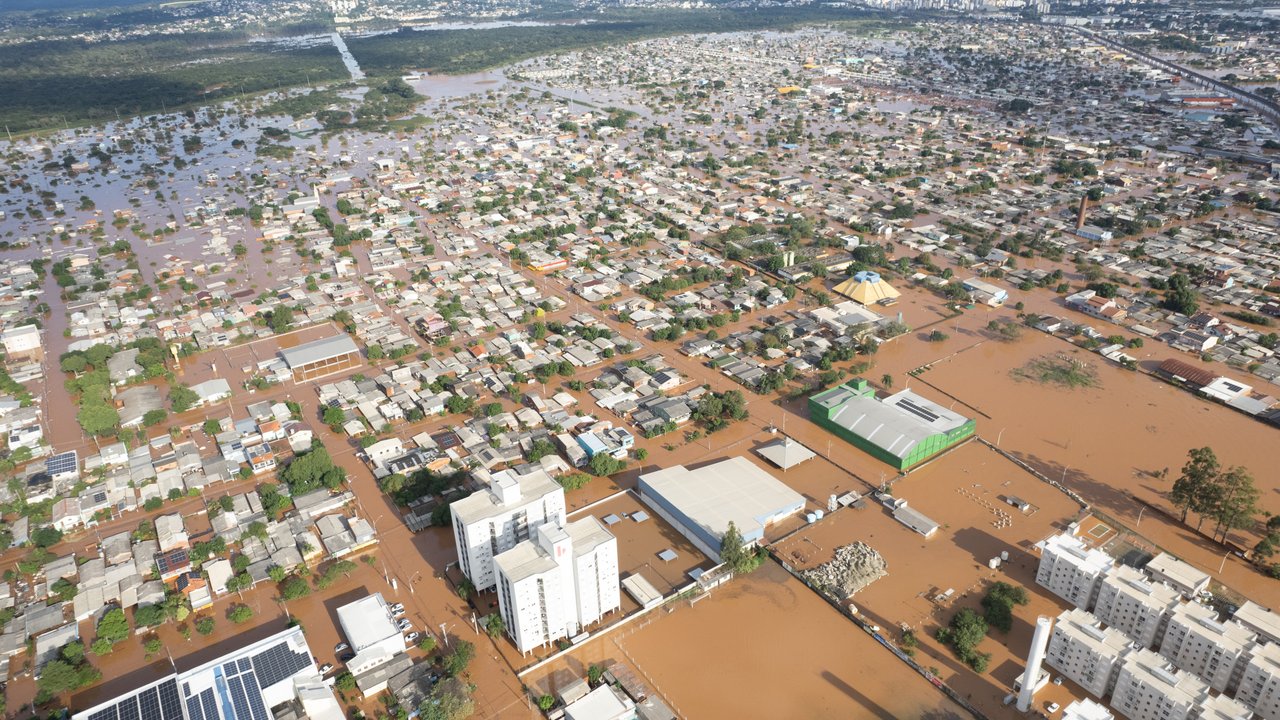
Aerial view of the flooding in Rio Grande do Sul 2024
Human intervention and the influence of climate change are increasingly throwing nature off balance. The negative records speak for themselves: in 2024, the southernmost state of Rio Grande do Sul experienced the worst flooding in Brazil for decades, between late April and early May. In some areas, around 500 millimeters of rainfall fell within a few days. More than two million people were affected by the disaster, and 200 lost their lives. Economic losses are estimated at around US$ 15bn (inflation-adjusted), of which less than US$ 1bn was insured.
Almost simultaneously, a months-long drought persisted in the north, at times affecting about 60 per cent of Brazil. That, too, caused damage worth billions, and crop failures rippled through the global market.
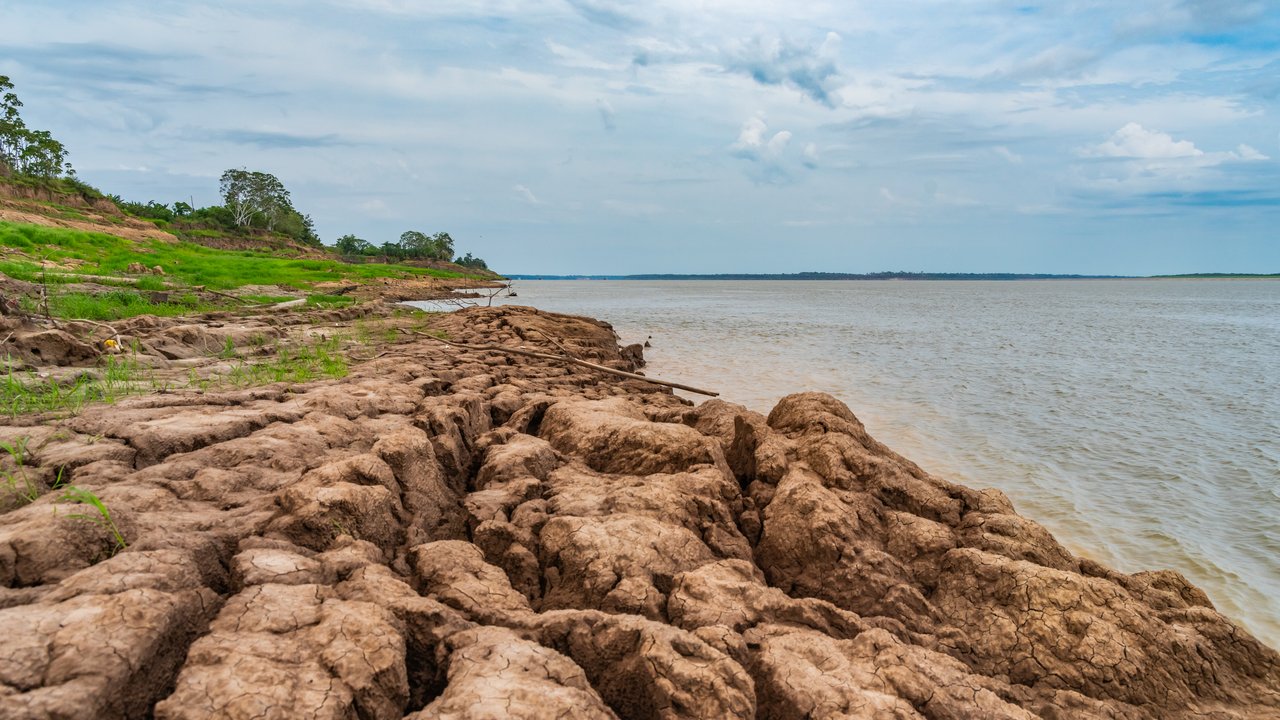
Parched and dry Amazon riverbank during drought in 2024
Brazil is the largest producer of the Arabica coffee variety. Affected by the drought in Brazil – and, on the other side of the globe, in Vietnam – coffee prices roughly doubled over the course of 2024.
The high agricultural share – 6.5 per cent of Brazil’s economic output – makes the country particularly vulnerable to the impacts of extreme weather. Floods and droughts destroy crops. The risk of drought exists across the entire country, while the risk of flooding is highest in the south-east. Energy supply also suffers under extremes. Brazil is very rich in water, with 12 per cent of the world’s freshwater reserves. 60 per cent of the country’s electricity is generated in hydroelectric power plants. However, water reserves are steadily declining.
Tobias Grimm assesses the economic losses caused by weather extremes:
“Since 1980, natural disasters in Brazil – excluding the difficult-to-quantify drought losses – have caused inflation-adjusted economic damage of around US$ 43bn. Only just over five per cent of that was insured,” he explains.
“The insurance gap has since narrowed only slightly. More than 80% of total losses were caused by floods – while droughts also regularly cause damage worth billions.”
In Brazil, temperatures are rising faster than the global average – by 0.17 °C per decade since 1950. Since the 1970s, this trend has accelerated to 0.27 °C per decade. The number of hot days is increasing. This triggers a vicious cycle: higher temperatures lead to greater evaporation, resulting in longer dry spells – but also to heavier rainfall. Studies on the extreme events of 2024 found that climate change made such occurrences significantly more likely and more intense.
Because of its size, geographical location and topography, Brazil spans several climate zones. The equator runs through the north, giving most of the country a tropical climate; the south is subtropical to temperate. Across the entire country, the ENSO (El Niño/Southern Oscillation) climate pattern in the Pacific Ocean – with its two opposing phases El Niño and La Niña – has a strong influence on weather extremes, in very different ways. El Niño phases such as in 2024 tend to intensify rainfall in southern Brazil and exacerbate droughts in the north.
During La Niña phases, the pattern reverses: the south faces greater drought risk, while the north receives more rainfall. Research recently stated that the ENSO fluctuation shifted to La Niña conditions which are seen likely to persist through December 2025 and February 2026.
ENSO is the climate fluctuation with the strongest influence on weather extremes in many parts of the world, although its effects are increasingly amplified by climate change.
Climate Change Demands New Strategies
Insurance Gap – A Risk with Consequences
This insurance gap has serious consequences: those affected often find it difficult to rebuild their lives. People living in disadvantaged communities – around 8.1 per cent of Brazil’s population – are particularly exposed to natural hazards. Businesses face ruin, and the state must step in with costly reconstruction aid. Experts therefore call for a broader spread of natural-disaster insurance and for government incentives to make premiums affordable. New approaches are needed to strengthen resilience to natural disasters. Experts advocate state incentives – such as subsidies or micro-insurance models – to make cover more affordable. Mandatory insurance against certain risks is also being discussed, as already considered in other countries. International cooperation, for example with GIZ and KfW, supports Brazil in establishing risk-management systems and developing sustainable financing mechanisms.
The insurance gap remains a central issue for Brazil’s future – not only economically but also socially. Those without insurance are often left to fend for themselves in the event of a disaster.
Munich Re Strengthens Climate Resilience in Brazil
Tobias Grimm is convinced:
“Brazil faces the challenge of developing both short-term protective measures and long-term strategies – for a country torn between flood and drought.”
With its financial strength and dependable capacity, Munich Re stands ready as a partner to help close the insurance gap for natural catastrophes in Brazil. The reinsurer has been analysing the effects of climate change on natural hazards for over five decades – a core business founded on market-leading risk expertise. After the severe floods of 2024, Munich Re developed a localised risk assessment that captures vulnerabilities more precisely and enables risk-adequate pricing. This allows insurance solutions to be offered in a targeted and reliable manner.
Parametric covers are particularly suitable for simple and affordable protection. They pay out automatically once defined thresholds – for example, rainfall amount, wind speed or drought duration – are exceeded. This principle is also used in international catastrophe pools.
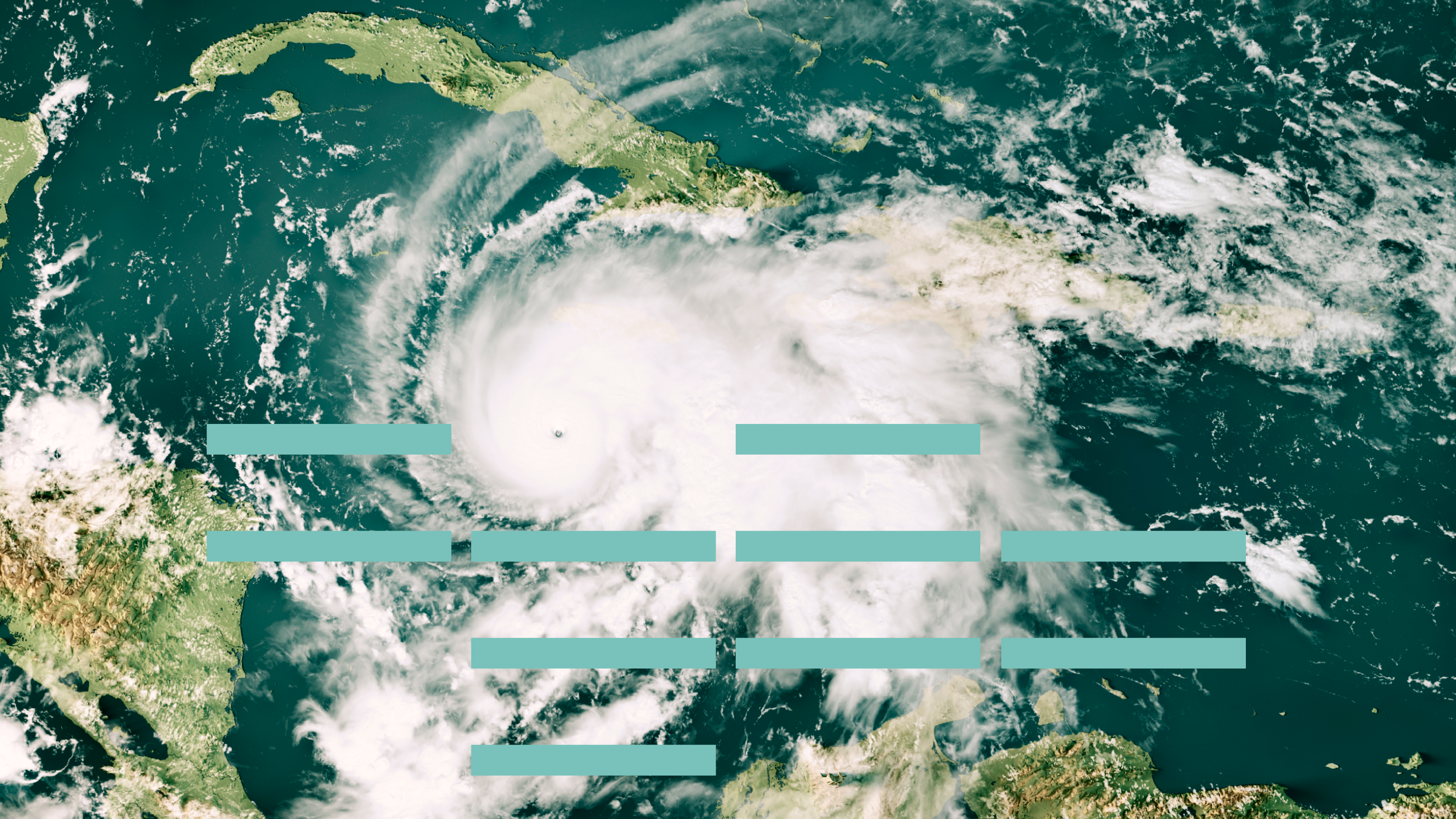
One such example is the Caribbean Catastrophe Risk Insurance Facility (CCRIF), through which 23 countries in the Caribbean and Central America have received a total of US $ 390 million following 78 events since 2007. Munich Re is one of the main risk carriers in this pool. Following Hurricane Melissa’s devastating landfall in Jamaica, the CCRIF announced that it would make a payout of US$ 70.8m to the Government of Jamaica. Furthermore, the Government is expected to receive a second payout from CCRIF under its excess rainfall policy. Jamaica was a founding member of the CCRIF at its establishment in 2007.
Experts