Want to see where physical risk sits across your own portfolio?

Summary
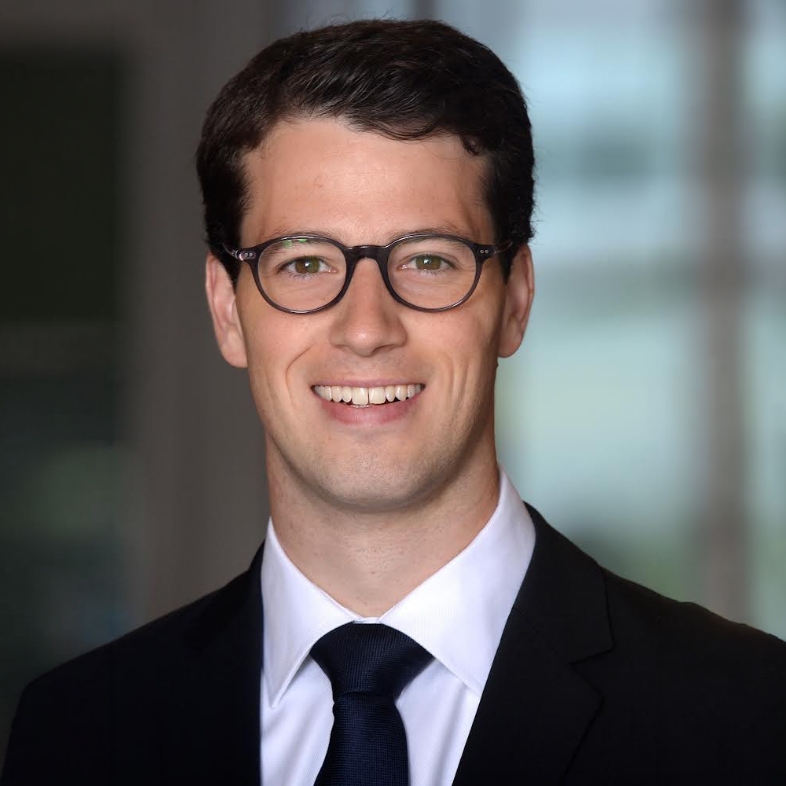
- David Fischer, Chief Product Officer at Risk Management Partners, a unit of Munich Re, joined Louie Woodall on the Climate Proof podcast
- The conversation covers why physical climate risk is still not fully reflected in financial decision-making, why the insurance protection gap remains striking, and what must happen before risk assessment turns into risk mitigation
- Listen to the full episode on the Climate Proof podcast
Twelve years at the intersection of energy, finance, and climate: the European Commission’s Emissions Trading System, PwC, and the International Energy Agency in Paris. David Fischer has spent much of his career working on problems that require collaboration between the public and private sectors.
Climate adaptation is one of them. Annual global climate finance has reached roughly US$ 2 trillion, but adaptation and resilience still account for only a small share. CPI’s 2026 landscape report1 puts tracked adaptation finance at US$ 64bn in 2024, underlining the scale of the gap between risk awareness and investment in resilience.
In conversation with Louie Woodall on the Climate Proof podcast, David argues that better decisions start with understanding where physical risk from natural hazards and a changing climate sits today, and how it may evolve tomorrow.
Is physical climate risk properly reflected in today’s financial decisions?
David’s answer is direct: in significant parts of the market, risk is still not fully reflected. The discussion goes beyond what Mark Carney called “tragedy of the horizon” when it comes to deciding about climate change and asks why long-dated mortgages and infrastructure finance can still be anchored too strongly in today’s risk footprint.
In the episode, David also introduces another challenge: a “tragedy of the mental model”. This means that many financial decisions still rely on assumptions that work well in stable environments, but become less reliable when natural hazards, exposure, and vulnerability are changing.
Is insurance becoming harder to access or afford?
Not in the way the debate is often framed. David argues that “uninsurability” per se rarely exists. Even today, risks remain insurable if they are understood, priced and managed properly. The more useful discussion is about the protection gap, prevention, adaptation, and the conditions under which insurance capacity can remain available.
That distinction matters. The insurance protection gap is not only a climate-change issue. Rising exposure, asset values, and vulnerability remain central drivers of loss trends, while climate change is increasingly influencing weather-related hazards in many regions. Understanding both sides of that equation is essential for insurers, lenders, corporates, and public-sector decision-makers.
Which counterparty should worry a lender?
Not necessarily the one with the highest gross exposure.
The episode explains why gross risk and net risk can behave very differently across a loan book. A borrower located in a high-hazard area may have taken meaningful adaptation measures, while another borrower with apparently lower exposure may have greater vulnerability or fewer options to reduce loss potential.
For banks, that changes the client conversation. The question is not only where the hazard is highest, but where risk is most relevant, where it can be reduced, and where better data can support more resilient credit decisions.
Spatial intelligence for climate risk is what credit scoring did for lending. It turns complex, opaque exposure and a multitude of risks into something measurable, and therefore actionable.
What is the point of measuring risk at all?
For years, the market often delivered assessments and left clients to decide what to do next. David argues that the goal was never measurement for its own sake. The goal is better decisions.
That shift brings adaptation ROI into the room: what a flood-protection measure costs, how much expected loss it could reduce, and whether physical risk reduction or financial risk transfer through insurance is the more effective option.
The change in perspective also changes the role of digital tools. No platform can solve climate adaptation on its own. But better spatial intelligence can help organisations understand where risk sits, how it may change, and which decisions are likely to make the biggest difference.
David also explains why Risk Management Partners is supporting Munich Climate Week as a founding partner. Climate resilience depends on data, but it also depends on collaboration between financial institutions, insurers, public-sector actors, corporates, technology providers, and local communities.
Listen to the full episode with David Fischer and Louie Woodall on the Climate Proof podcast.
1 https://glcf.climatepolicyinitiative.org/