
React earlier to natural hazard risks
Make chemical value chains more stable with Location Risk Intelligence.
Natural hazards and weather-related events disrupt chemical production, utilities, and supply chains. Munich Re’s Location Risk Intelligence is a modular SaaS solution that helps chemical companies manage their physical risk exposure worldwide, supporting safe, reliable, and resilient operations.
In the chemical industry, weather-related events can impact chemical plant safety and process stability. Extreme heat, wildfires, water scarcity, flooding, storm surge, and sea level rise can affect asset integrity, operational continuity, and logistics. Even short‑term events can cascade across tightly integrated chemical value chains.
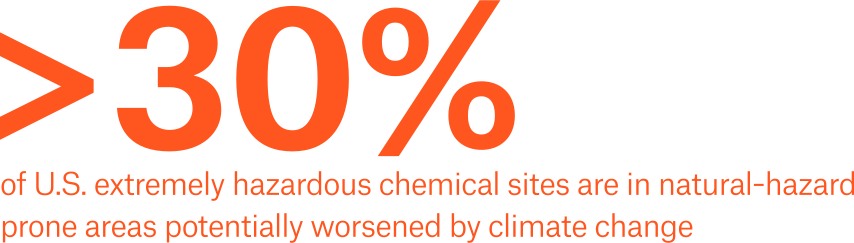
In the United States, approximately 11,000 facilities make, use, or store extremely hazardous chemicals. If accidentally released, such chemicals could cause significant harm to people or the environment. Nearly a third of these facilities (31%) are located in areas with certain natural hazards that may be worsened by climate change, according to the U.S. Government Accountability Office (GAO).
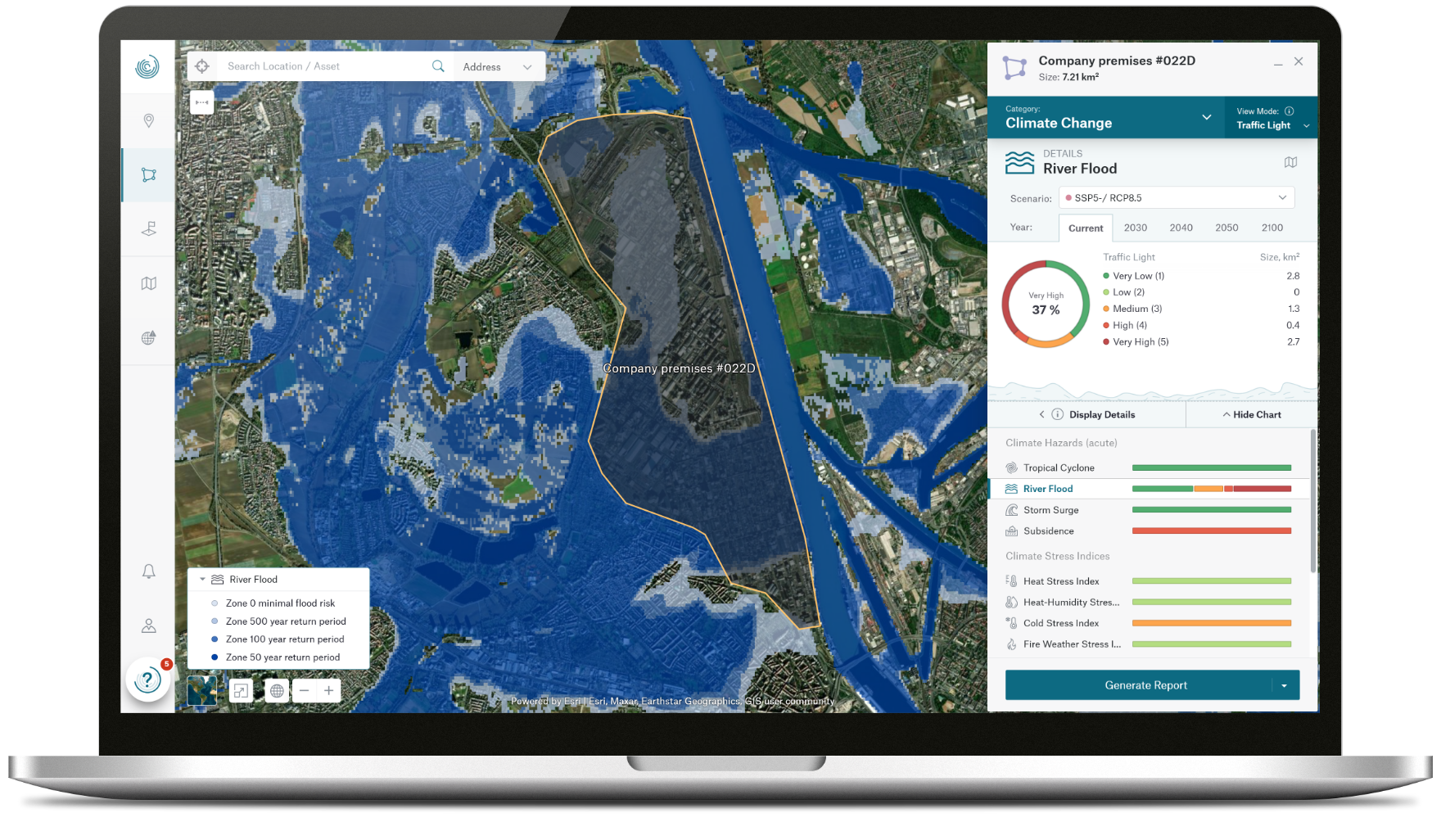
Munich Re’s Location Risk Intelligence allows chemical-sector companies to understand, measure, and manage risks from natural hazards and climate change at individual sites and at regional levels. Data and insights support safe operations, inform strategic decisions, and align with regulatory expectations.
Top four ways to protect chemical-sector sites and operations
In the chemical industry, Location Risk Intelligence allows you to integrate natural hazard and climate risk insights into procurement, production, and distribution, supporting more informed, data-based decisions.
Chemical plants require robust protection from weather extremes to maintain safe and stable operations. Damage to equipment, utilities, or containment systems can lead to shutdowns, elevated safety risks, and environmental impact.
Location Risk Intelligence provides site‑specific hazard insights that help you prioritise mitigation and adaptation measures such as flood protection and emergency preparedness to reduce potential consequences and boost resilience.
Chemical companies face stringent reporting requirements, including risk analysis that is coupled with climate scenarios for present and future timeframes. Yet collecting data from sources across the globe is time-consuming and formats are often inconsistent.
With Location Risk Intelligence, chemical companies can simplify climate risk reporting under CSRD, TCFD/ISSB. Exposure forecasts for multiple IPCC scenarios are in a standardised format, which saves time and reduces workload.
Water availability is critical for chemical processes, from cooling and processing to wastewater treatment. Droughts and water scarcity can constrain production or affect operational stability at chemical sites.
Location Risk Intelligence enables location‑specific assessment of water‑related hazards, supporting proactive water‑risk management across sites and regions. Uncommonly dry areas can be subject to flooding following heavy rain. Pinpoint exposed areas and be prepared for weather extremes.
Climate risks are evolving and can alter hazard profiles for existing and planned sites. Long‑term exposure to heat, flooding, or water scarcity may affect asset performance, insurance conditions, and operating costs.
Scenario‑based IPCC-aligned climate insights through Location Risk Intelligence inform your decisions on where to expand production, reduce exposure, or employ adaptation measures for long-term profitability.
Your benefits with Location Risk Intelligence in the chemical industry
Understand risk exposure
Evaluate individual facilities or entire areas for key risks. Take steps to maintain chemical plant performance with climate-resilient upgrades.
Improve operational resilience
Identify natural hazard risks early to reduce costly interruptions and downtime. Strengthen continuity planning to support stable operations.
Protect sites and critical assets
Prioritise mitigation and protection using location specific hazard insights. Identify high exposure to increase resilience.
Access decision-ready data
Rely on 140+ years of Munich Re natural hazard expertise. Increase transparency to gain stakeholder trust and avoid reputational damage.
Meet disclosure needs
Collect natural hazard and climate risks as required by regulators. Consistent, IPCC-aligned data simplifies reporting and disclosure.
Support long-term investment decisions
Use future climate scenarios to protect long-term asset values. Allocate capital to sites that remain viable under changing climate conditions.

Munich Re´s Location Risk Intelligence allowed us to swiftly carry out risk analysis for all our production sites that is filterable and applicable by specific regions. This gave us an at-a-glance overall view of climate risk.
Clariant Ltd, one of the world’s leading specialist chemical companies, is already successfully incorporating climate risk assessment into its business. Get the case study now!

How Location Risk Intelligence and its editions support chemical producers
Munich Re’s Location Risk Intelligence is a modular SaaS solution that allows chemical companies to manage physical risks from natural hazards and climate change across sites, utilities, and supply chains. Choose the edition that best supports your chemical-sector needs.
Climate Change Edition
Understand current and future natural hazard and climate risks affecting chemical sites using IPCC‑aligned scenarios. The Climate Change Expert Module covers 64 climate and natural hazard parameters.