Hail, tornadoes and flash floods
Risks from severe thunderstorms on the rise
Losses caused by severe thunderstorms have increased many times over since the early 2000s. Hail, severe wind gusts, tornadoes, heavy precipitation and lightning are the main hazards, producing losses that can quickly run into the billions. Insurers would be well advised to have a firm grasp of the attendant risks: losses are already increasing substantially due to rising exposed asset values, and climate change is further exacerbating the danger. In industrialised countries, many thunderstorm-related losses, e.g. from hail damage, are covered by insurance.
The figures speak for themselves, as even adjusted for inflation, the rapid rise in losses is dramatic: in the past ten years, severe thunderstorms have caused average global losses of around US$ 58bn (inflation-adjusted). In the ten years from 2000 onwards, in contrast, the average figure was still around US$ 13bn. Insured losses have risen just as sharply.
The higher losses can largely be attributed to the rise in the value of assets at risk: in many areas, meadows and woodlands have been replaced by buildings, businesses and infrastructure. Houses are getting bigger, infrastructure is becoming more expensive, and there are more and larger vehicles. Climate change accounts for the rest: an atmosphere that is 1°C warmer can hold 7% more moisture. A warmer atmosphere therefore intensifies the water cycle, which in particular increases the intensity of heavy rainfall and the potential for more powerful thunderstorms.
In general, it can be assumed that thunderstorm severity and hailstone size are correlated. At the same time, due to rising temperatures, hail melts more on its way to the surface. Thus, smaller hailstorms may become less common, while the proportion of storms involving destructive large hailstones rises.
A new study* suggests that damage caused by hailstorms could increase by 40% or more worldwide by the end of the century, depending on the various climate scenarios. The frequency of hailstorms involving larger stones (over 3 cm in diameter) could increase by up to 50%. The risk is likely to increase particularly sharply in the middle latitudes, such as Europe and parts of North America. In tropical or monsoon regions, on the other hand, the hail risk is likely to decline.
~US$ 1,100bn
Losses caused by severe thunderstorms worldwide 1980-2025
(adjusted for inflation, including >70% in the US)
The United States accounts for the largest share of severe thunderstorm-related losses worldwide and more than 80% of global insured losses. In Europe, losses have increased significantly in recent years, although they vary from region to region and remain at a lower level overall. Australia is another region at risk from severe thunderstorms that has significant insurance coverage, whilst in many parts of Asia insured losses are lower due to the lower insurance penetration.
Severe thunderstorms can occur virtually anywhere. And that is precisely why loss prevention is so challenging: predicting exactly where a thunderstorm will form is, at best, only possible shortly before the event. However, it is possible to identify regions that are subject to a particularly high thunderstorm risk. In these regions’ large urban centres, potential losses can often run into the billions.
X11_consent-in-forms.jpg/_jcr_content/renditions/original./Raedler_Anja_n340032_(c)X11_consent-in-forms.jpg "Anja Rädler")
The billion-dollar challenge posed by severe convective storms is growing – not just because of climate change. Especially extreme hail risk is underestimated. The risk is rising because storms are getting more damaging, and society is more exposed with more values at risk than ever.
The sources of thunderstorm-related losses
The main causes of severe thunderstorm-related losses include hail – the dominant loss driver – as well as tornadoes, severe wind gusts and heavy rain, which often leads to localised flooding.
1. Hail
Hailstorms are widely considered the main driver of severe thunderstorm-related losses. Buildings and infrastructure are particularly prone to losses as a result of severe hailstorms. Photovoltaic panels, building insulation and exterior window blinds are contributing to rising losses, which is why loss prevention measures are so crucial. Frequently, a very large proportion of the losses involves damage to vehicles. Further, hailstones with a diameter of 5 cm or more can produce injuries or even fatalities.
2. Flash floods and localised flooding
Heavy precipitation resulting from severe thunderstorms can also lead to substantial losses. How quickly heavy precipitation leads to flash floods and flooding depends on the respective catchment area. Factors like steep topography and limited water-absorption capacities due to paved surfaces or buildings can further increase the risk of flash floods after heavy precipitation. In addition, when the soil is over-saturated, landslides can occur. When debris clogs up culverts, the water accumulates before the obstacle – and when it breaks loose, the result can be a devastating flood wave.
The animation illustrates the flow processes in and around a tornado
3. Tornadoes
At their most intense, tornadoes are the most violent type windstorm on Earth, reaching 500 km/h in the most extreme events. Ranging in size from less than 100 meters to a couple of kilometers, they often leave behind narrow but devastating swathes of destruction. Tornadoes usually form from particularly powerful thunderstorms known as supercells.
Globally speaking, these storms predominantly form in regions with temperate climates. The United States sees the most tornadoes annually, occurring most often in the American Midwest and along the infamous Tornado Alley, which runs roughly parallel to the Rocky Mountains, from South Dakota and Iowa in the north to Texas in the south.
Regional perspectives:
Thunderstorm losses in the US have increased sixfold
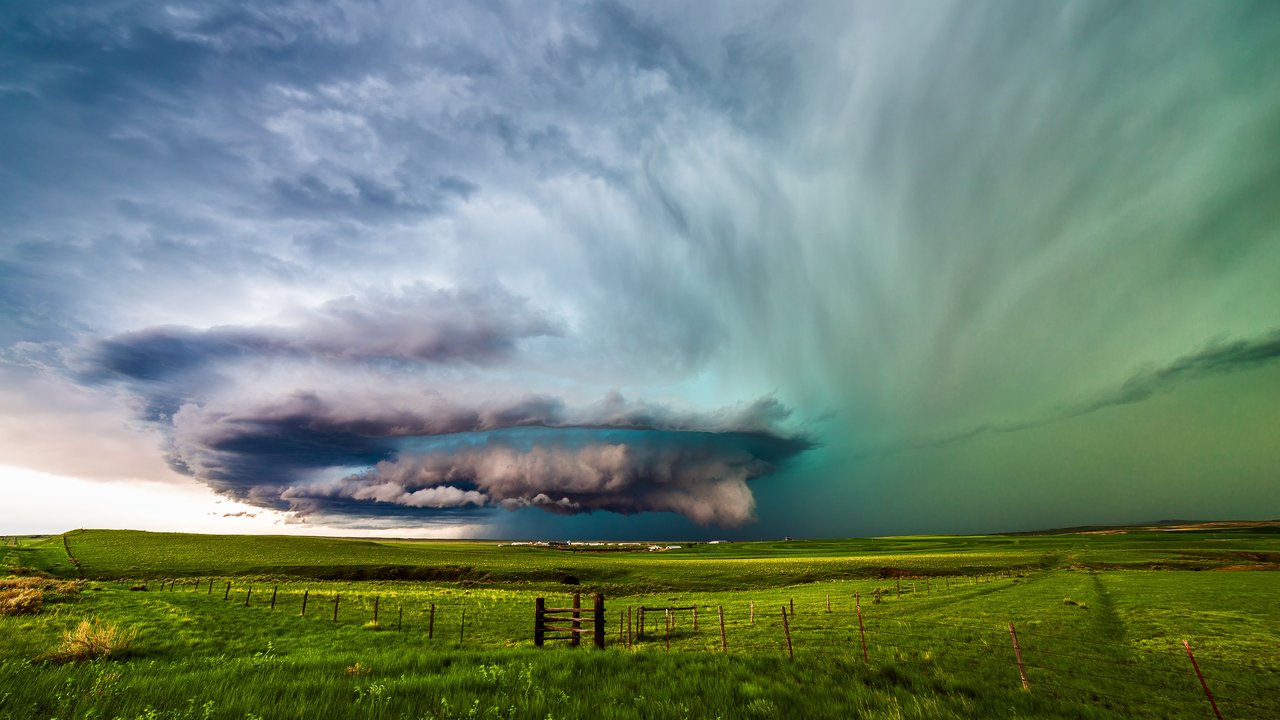
The vast majority of global thunderstorm losses occur in the US: 75% of total inflation-adjusted losses and a staggering 81% of insured losses since 2000. Over the past five years, severe thunderstorms in the US have caused total annual losses averaging US$ 52bn – six times as much as the annual average in the early 2000s. The picture is similar when it comes to insured losses: over the past five years, the average annual claims paid for by insurers amounted to just over US$ 39bn – seven times as much as in the early 2000s.
This means that a large number of seemingly minor, regional events like thunderstorms now collectively cause losses each year equivalent to those from an extremely destructive hurricane. Accordingly, alongside hurricanes, severe thunderstorms are cumulatively the most important weather disaster risk for the US insurance industry and an enormous driver of overall economic losses.
North America is a severe thunderstorm hotspot because it is the only continent in the world reaching all the way from the Tropics to the Arctic without any major mountain ranges cutting it across from east to west. This leaves the center of the continent east of the Rocky Mountains wide open for colliding air masses. Here, three different air masses meet: Warm moist air from the Gulf of Mexico, cold dry air from Canada and hot dry air from the desert South-West. This makes the region meteorologically speaking extremely unstable which enables severe thunderstorms to form that often produce large hail and tornadoes.
Around two-thirds of all storm losses in the US are caused by hailstorms – and the risk is rising. Climate change will likely lead to an increase in severe storms with very large hailstones, whilst minor hailstorms will likely become less frequent. A new study** predicts that the frequency of hailstorms with stones larger than 4 cm in diameter will climb by up to 75% in the US by the end of this century – or more, depending on the climate scenario.
Another study***, in which Munich Re was involved, concluded that there are regions where the frequency of severe hailstorms is on the decline, such as the southern Great Plains, while increasing elsewhere. Overall, hailstorms with very large hail (>5cm) appear to be shifting further east across the US, where they are likely to increase. Since there are many more cities and metropolitan areas here than further west in the Great Plains means the risk of losses is increasing. The study also concluded that the massive rise in hail losses in the US is primarily due to the rising value of exposed assets, and to a lesser extent to climate change.
After hail, the second-biggest cause of losses from thunderstorms in the US is wind gusts which are very common and can produce losses in the billions.
As a very high proportion of storm losses in the US are insured, severe thunderstorms pose a challenge for insurers. In order to appropriately price insured risks, their risk models must consistently take into account changes in exposure and the effects of climate change. Loss prevention is of tremendous importance, which is why Munich Re has long supported the Insurance Institute for Business and Home Safety (IBHS). Among other things, the IBHS conducts research into building materials that are more resistant to hail and hurricane-force winds.
Severe hailstorms during thunderstorms on the rise in Europe
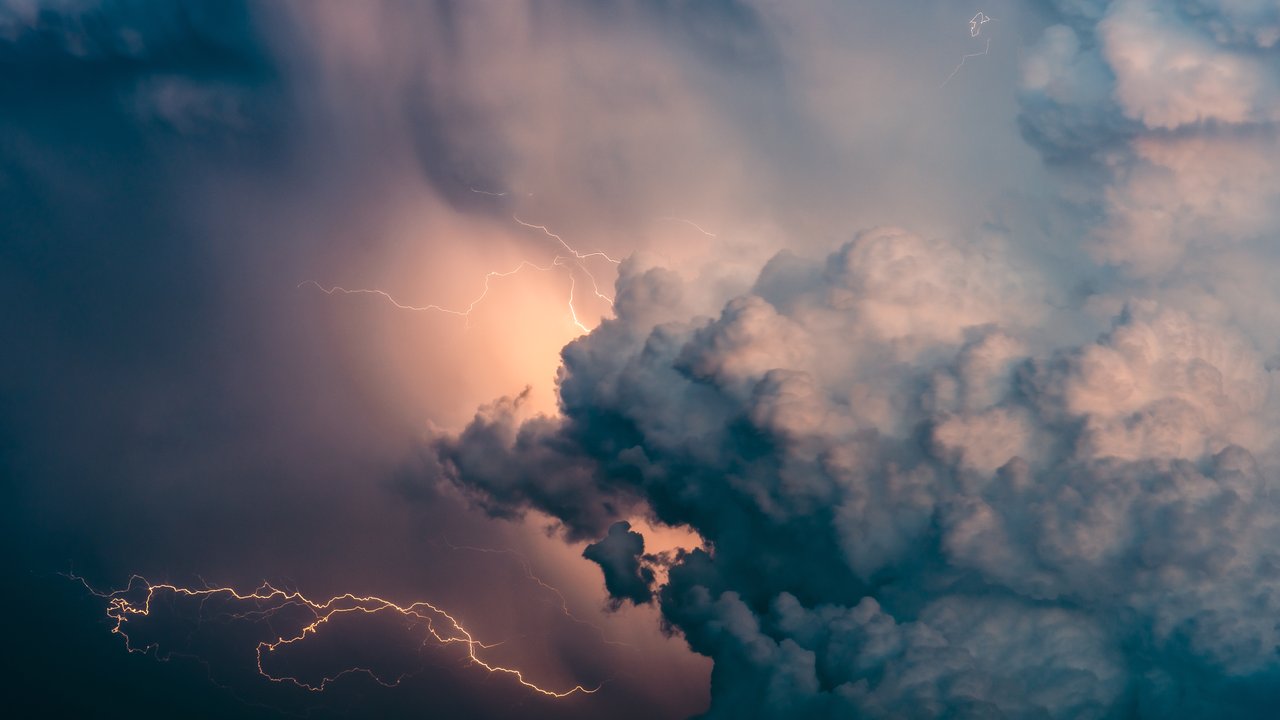
In Europe, losses caused by severe thunderstorms are also rising dramatically. The impacts of climate change are more pronounced here than in other regions, even though the loss trend is also largely affected by rising exposed assets. Over the past 25 years, total losses, calculated as a five-year average, have nearly quadrupled to US$ 9.2bn on average over the past five years. Moreover, average insured losses have soared to almost six times their previous level – averaging around US$ 6.1bn between 2021 and 2025.
In 2023, the most expensive year for severe thunderstorms to date, the losses in European countries reached a record-breaking US$ 17bn (inflation-adjusted), of which nearly US$ 13bn were insured. These losses were especially due to thunderstorms in the Alps and over the Mediterranean. In northern Italy, a severe thunderstorm produced hailstones measuring up to 19 cm in diameter, causing massive losses. After years of ever-increasing storm losses, the past two years have been less costly, reflecting natural variability in year-to-year loss severities.
In recent years, Munich Re has participated in several scientific studies aimed at assessing the risk of severe hail and making it more transparent. According to one of these studies, severe thunderstorms accompanied by costly hailstorms in Europe occur most frequently in southern France, eastern Spain, the Alpine states and the Balkans. In particular, the number of hailstorms has increased significantly in recent decades in northern Italy, Austria, Croatia and, further south, in the Balkans.
The beforementioned global hail study*** even found that Europe had seen the sharpest rise in severe hailstorms worldwide. The study also found a clear link between the loss events and the effects of climate change. In northern Italy, for example, the number of thunderstorms actually decreased slightly during the period under review (1950–2023). However, the likelihood of thunderstorms with very large, destructive hailstones rose by almost 80% in the same period.
And the trend towards more severe hailstorms in Europe is poised to continue: even under a moderate climate scenario (warming of around 2.4°C compared with pre-industrial levels), the number of loss-producing hailstorms with very large stones (>5 cm in diameter) is expected to climb by 30 to 40% in virtually all of Europe by the end of the century, according to a further study conducted in collaboration with Munich Re****. In northern Italy, the Balkans, and along the Mediterranean coasts of France and Spain – all of which are already hail hotspots – the increase could even be substantially worse.
This article may also interest you:
Newsletter
Solutions for assessing and managing risks
Reinsurance solutions


Industry solutions



Contact our experts