Extreme weather events and other natural hazards are among the key risks facing companies in the renewable energy sector. For wind energy projects a proactive approach to these hazards and climate-related risks is therefore essential. Systematically identifying and assessing potential hazards and integrating them into planning and operational processes establishes a solid basis for decision-making and increase the resilience of their projects.
Wind farms, for example, are exposed to a wide range of risks associated with natural hazards. Damage often occurs as a result of heavy rain and flooding, mainly affecting access roads and material storage areas. Less common, but equally significant, are risks posed by storms, forest fires, lightning strikes or hail, which can cause considerable disruption both during the construction phase and during ongoing operations.
Customized climate risk assessment for Vestas
As a leading global wind turbine manufacturer with a total global installed capacity around 170 GW, Vestas faces the challenge of managing and insuring complex construction project across diverse geographies and climate zones. Ensuring adequate coverage against natural hazards during the construction phase is a critical part of this responsibility.
At the recent FERMA conference in Madrid, there was an opportunity to gather, and to examine Munich Re's Location Risk Intelligence tool in greater detail through direct dialogue with experts from Munich Re Facultative & Corporate (F&C), together with Risk Management Partners.
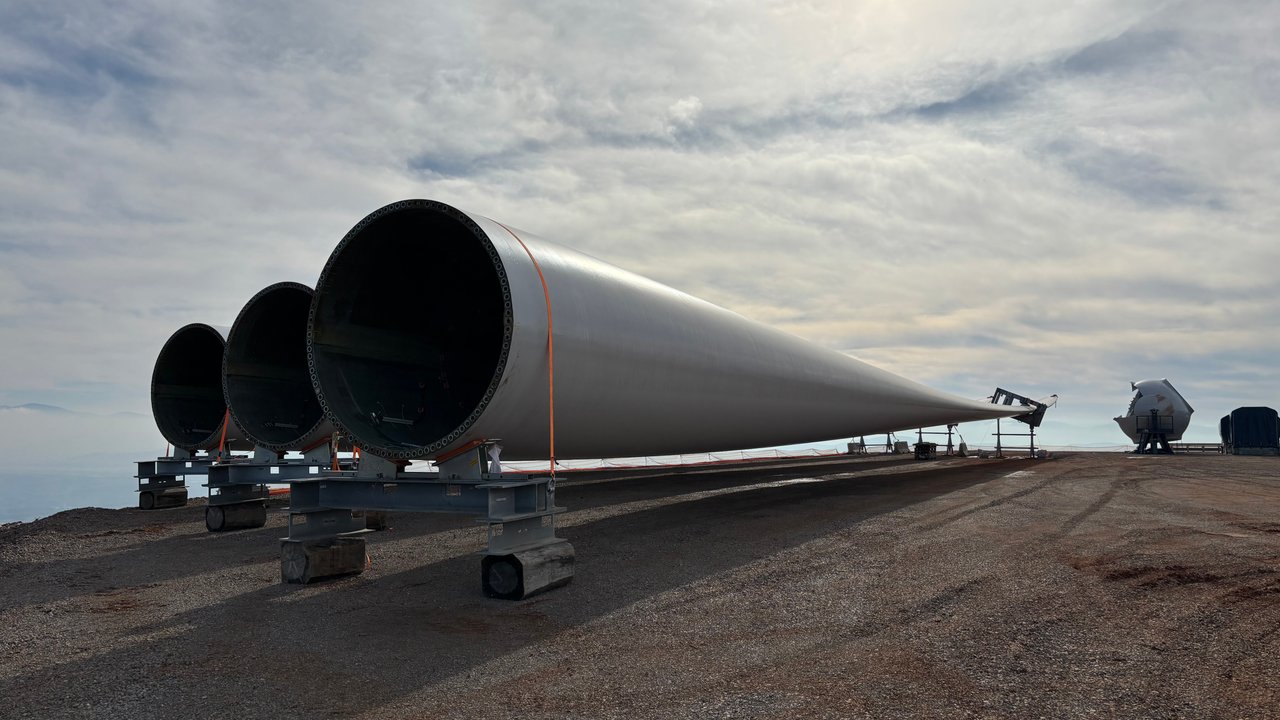
A key issue was the precise identification and analysis of sites to identify heightened climate risks and incorporate them into Vestas’ risk assessment. Modern tools such as Munich Re's Location Risk Intelligence play a crucial role in this process: They make it possible, for example, to identify potential site-specific natural hazards and the associated costs resulting from washed-out access roads at an early stage.
Munich Re's Location Risk Intelligence – systematic analysis of natural hazards
For the structured capture and assessment of physical climate risks, Munich Re Risk Management Partners offers Location Risk Intelligence, a modular SaaS solution. The tool enables the early identification of potential site-specific natural hazards and the associated risks and costs, and their incorporation into risk assessment and mitigation. Detailed risk maps help identify critical sites and integrate this information specifically into planning, construction, and insurance processes.

In addition to site assessments for foundations and infrastructure such as access roads, Location Risk Intelligence is also suitable for analyzing risks of weather-related construction interruptions, such as those caused by hurricanes in the Caribbean, based on scientific and historical data as well as projections of future events.
The goal is optimal insurance coverage, in which potential risks are identified and addressed as early as possible. Both Vestas and Munich Re share the common goal of realistically classifying, assessing, and actively managing climate risks, thereby increasing planning certainty for all parties involved.
The collaboration between Munich Re and Vestas encompasses the analysis of individual projects and participation in a comprehensive, global annual program. Munich Re F&C covers Vestas’ construction projects worldwide, thereby creating a long-term foundation for the structured management of risks arising from natural hazards and weather events.
The collaboration with Munich Re enables us to conduct a transparent and precise assessment of climate-related risks for the construction of our wind turbines. This allows us to improve planning, make optimal decisions, and sustainably increase the resilience of our projects. Moreover, being a market standard in the insurance market, it allows us to anticipate and set commonly agreed grounds for the different discussions with insurers about the covers that we need.
Improving internal risk management
The use of Location Risk Intelligence primarily serves to improve and refine climate risk management and risk assessment processes. Vestas is focused on this data-driven analysis to identify potential natural hazards at an early stage and systematically incorporate them into planning and operational decisions. The resulting insurance solution is a valuable outcome that specifically safeguards construction projects.
Insurance solutions for sustainable energy
Beyond onshore wind energy, Munich Re F&C also offers insurance solutions for offshore wind farms, photovoltaics, solar thermal energy, and battery storage. This makes the offerings relevant to a broad spectrum of project developers and operators - from large energy companies to municipal entities.
Turbine manufacturers, who deliver, pre-assemble, and install turbines on-site in multiple stages, benefit from continuous climate risk support throughout all construction phases.
Outlook
The collaboration between Vestas and Munich Re illustrates how combining in-depth risk expertise and advanced analytical technologies can support more effective climate risk management for policyholders on the one hand and to develop tailored insurance solutions on the other.
As extreme weather events become more frequent and severe, precise, data-driven assessment of natural hazards will play an increasingly important role in enabling the successful delivery of wind energy projects and supporting the continued expansion of sustainable energy.