
Munich Re: Risks are becoming more global and more volatile – the value of reinsurance has never been more evident than it is today
09/06/2026
Reinsurance
- Insured losses from non-peak perils exceed US$ 100bn for the first time last year
- Cyber risks and risks posed by artificial intelligence are increasingly reshaping the risk landscape
- Understanding risks and taking preventative measures can offset the impact of loss events
- In-depth risk expertise and a diversified portfolio: Munich Re offers stability across market cycles

The value of reinsurance has never been more evident than it is today. A resilient reinsurance sector is capable of absorbing increasingly complex and globally interconnected risks. Offering reliable capacity underpinned by our exceptional financial strength, outstanding expertise and innovative solutions, we create stability, facilitate investment and support recovery following major loss events. These criteria are crucial to long-term economic resilience and the insurability of risks.
Reinsurance as society’s immune system
At present, the market environment is facing an abundance of uncertainties: the consequences of climate change, geopolitical tensions and rapid technological development are all occurring simultaneously and intensifying one another. It is at times like these that Munich Re’s great strength as a reliable partner for its clients and as an immune system for society as a whole becomes apparent. Insurance protects people, mitigates financial losses and enables progress. Just as the immune system protects the body from life-threatening illnesses, insurance protects people and businesses from losses that could threaten their very existence.
In 2025, insured losses from non-peak perils exceeded US$ 100bn for the first time
Natural hazards and natural disasters, in particular, remain significant risk drivers. The impacts of climate change are becoming increasingly tangible.
Last year, global insured losses passed the US$ 100bn mark for the sixth consecutive year. It is evident that even non-peak perils – events that fall short of the most severe natural disasters, such as hailstorms – have now exceeded the US$ 100bn mark per year (insured; US$ 104bn in 2025), following years of upward growth. Whilst non-peak perils were long regarded as events involving comparatively low losses overall, they have now begun to add up to loss levels that were previously associated primarily with major events. This trend is progressively becoming the new normal.
In addition to these medium-sized loss events, heat – a more insidious risk – is also on the increase as a driver of claims. The consequences of heatwaves have claimed a growing number of lives in recent months. Furthermore, exceptionally high temperatures, as well as floods and other non-peak perils, are having a significant impact on infrastructure and, consequently, on supply chains. They also cause considerable damage to agriculture, healthcare systems, and to buildings and technical installations. Consequently, such natural hazards are shifting more and more from being primarily ecological risks to economic risks, even though it is not always easy to establish a causal link in the case of heat-related damage.
Last year, the wildfires in California caused the greatest economic loss ever recorded in this category, totalling US$ 54bn. Europe, too, was severely affected by wildfires. Particularly recently, such fires have broken out in the immediate vicinity of major cities such as Bordeaux, Marseille and Madrid, as well as in Sicily. Ultimately, however, major urban centres in Europe have so far been spared.
In the current situation, reinsurers play a key role in helping better understand and assess changing risks. Furthermore, they can help with prevention and resilience, and cushion claims burdens. They thus make a pivotal contribution to economic stability and to the insurability of new and existing risks.
Risks arising from cyber attacks and artificial intelligence call for new risk management solutions and enhanced risk coverage
The growing use of artificial intelligence and the threats posed by cyber risks are fundamentally changing the risk landscape. Although cyber risks currently present one of the greatest business risks, uptake of cyber insurance remains low.
The increasing professionalism of attackers, coupled with a risk landscape which is becoming ever more complex due to artificial intelligence, geopolitical tensions and systemic interdependencies, is driving up the costs of cyber crime even further. Studies by Munich Re show that 89% of companies say they do not feel adequately protected against this. The complexity of these risks calls for independent and innovative modelling, as well as specialist AI expertise, which Munich Re is able to offer its clients.
With Munich Re as the leading provider, certain standards have now been established for cyber risks, designed to address such risks precisely and provide appropriate cover. Concerning AI risks, this development is yet to come. Demand is growing; at the same time, given the complex nature of these risks, there is a need for in-depth expertise, a keen understanding of risk and clear wording in contracts. Moreover, Munich Re’s cedants and clients also benefit from innovative products. Munich Re is thus actively contributing to the development of the market for AI risk cover.
The current market necessitates a diversified portfolio and consistent cycle management
In the current climate, a holistic understanding of risk and broad diversification are becoming increasingly important. Through its broadly diversified global portfolio, Munich Re provides its clients with stability that extends beyond the various sector-specific and regionally very different market cycles. The strength of its balance sheet, its staff’s in-depth understanding of risk and its long-term, partnership-based relationships with clients enable Munich Re to provide market-leading capacity even during periods of market volatility. This is particularly true when competitors withdraw from the market following major loss events (such as COVID-19, Hurricane Ian, etc.), as was the case a few years ago, and clients have utmost need of Munich Re’s capacity and stability. At the same time, in market phases where available capital significantly exceeds demand, Munich Re consistently prioritises portfolio quality and profitability over mere growth in gross premiums, so that it can remain its clients’ most reliable partner even in more challenging times.
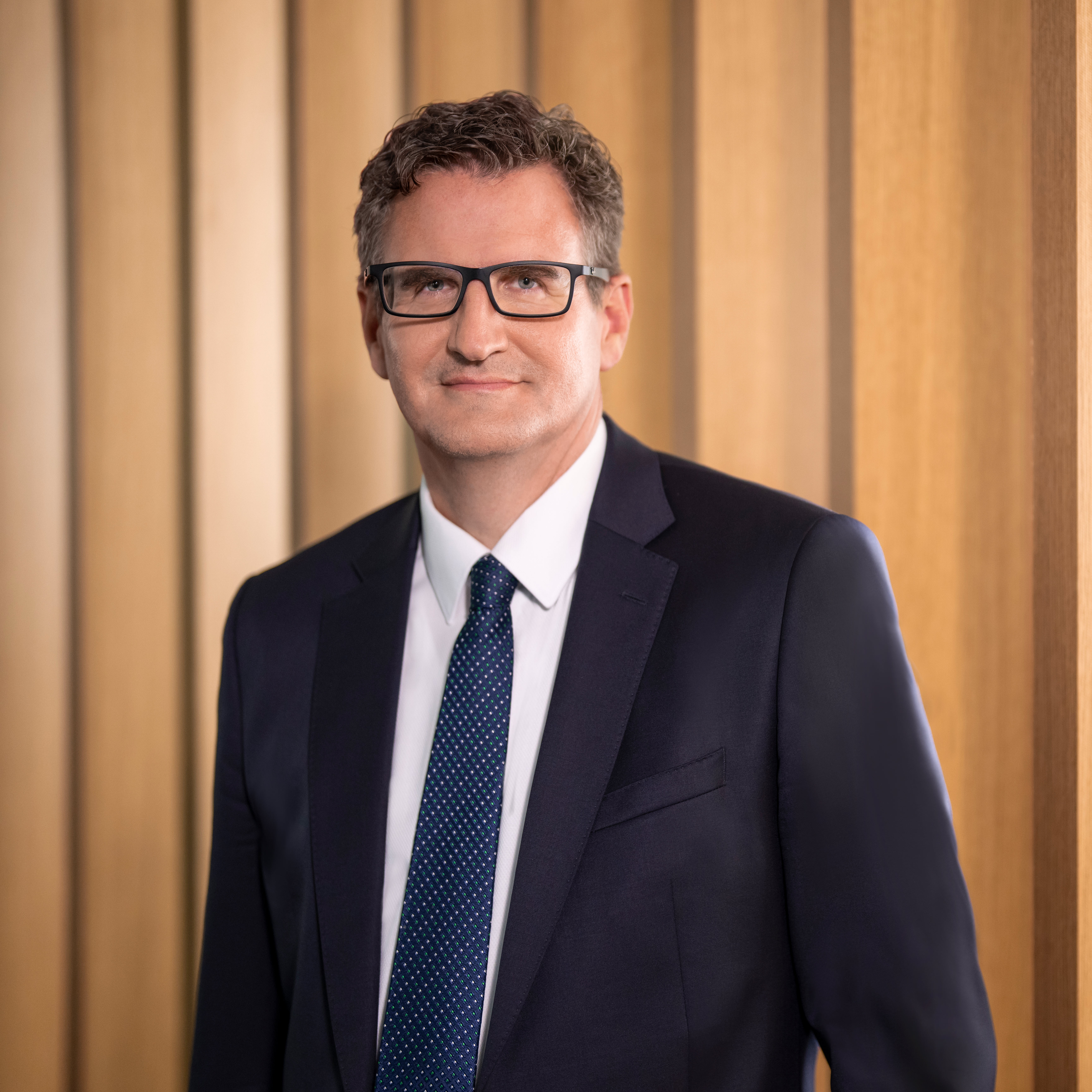
Volatility is not a temporary phenomenon. Our mission is to pool our expertise, capacity and innovative strength to help our clients remain resilient, adapt successfully to change and navigate the new risk landscape with confidence. And regardless of market cycles, this remains true: we are there for our clients – especially when they need us most.
Steadily increasing reinsurance capital: a reliable source of capital
Furthermore, with reinsurance capital growing at a rate of +5.8% per annum over the past eight years, the insurance sector has proved to be a reliable source of capital for its clients. Munich Re is shaping the market in a sustainable way through long-term partnerships and with a clear focus on client needs, in line with its Ambition 2030 corporate strategy. This self-image is also reflected in the very positive feedback from clients. With a Net Promoter Score of 70, the clients surveyed attest to Munich Re’s expertise, reliability and in-depth understanding of their respective businesses.
Munich Re
Munich Re is one of the world’s leading providers of reinsurance, primary insurance and insurance-related risk solutions. The Group consists of the reinsurance and ERGO business segments, as well as the asset manager MEAG. Munich Re is globally active and operates in all lines of the insurance business. Since it was founded in 1880, Munich Re has been known for its unrivalled risk-related expertise and its sound financial position. Munich Re leverages its strengths to promote its clients’ business interests and technological progress. Moreover, Munich Re develops covers for new risks such as rocket launches, renewable energies, cyber risks and artificial intelligence. In the 2025 financial year, Munich Re generated insurance revenue of €60.4bn and a net result of €6.1bn. The Munich Re Group employed about 44,000 people worldwide as at 31 December 2025.
Disclaimer
This media release contains forward-looking statements that are based on current assumptions and forecasts of the management of Munich Re. Known and unknown risks, uncertainties and other factors could lead to material differences between the forward-looking statements given here and the actual development of our Company, in particular the results, financial situation and performance. Munich Re assumes no liability to update these forward-looking statements or to conform them to future events or developments.
Further information
For media inquiries please contact
/Straub_Stefan.jpg "Stefan Straub")

/Joas_Irmgard.jpg "Irmgard Joas")
/Ziegler_Frank.jpg "Frank Ziegler")
/Ashleigh-Lockhart.jpg/_jcr_content/renditions/crop-1x1-400.jpg./crop-1x1-400.jpg "Ashleigh Lockhart")
.jpg/_jcr_content/renditions/crop-1x1-400.jpg./crop-1x1-400.jpg "Bud Hedges")