Watch our webinar with IBAT

Summary
- For insurers, banks, real estate investors, and corporates, biodiversity and nature risk is evolving and becoming relevant in connection with climate change, physical risks, and resilience.
- With IBAT data, users can screen sites and portfolios for biodiversity risk and identify exposures, aligned with disclosure requirements under TNFD, CSRD, IFC, and other frameworks.
- IBAT brings together three of the world’s most authoritative global biodiversity datasets on threatened species, key biodiversity areas, and protected and conserved areas.

Clients tell us that having a strong nature strategy helps strengthen stakeholder and investor confidence.
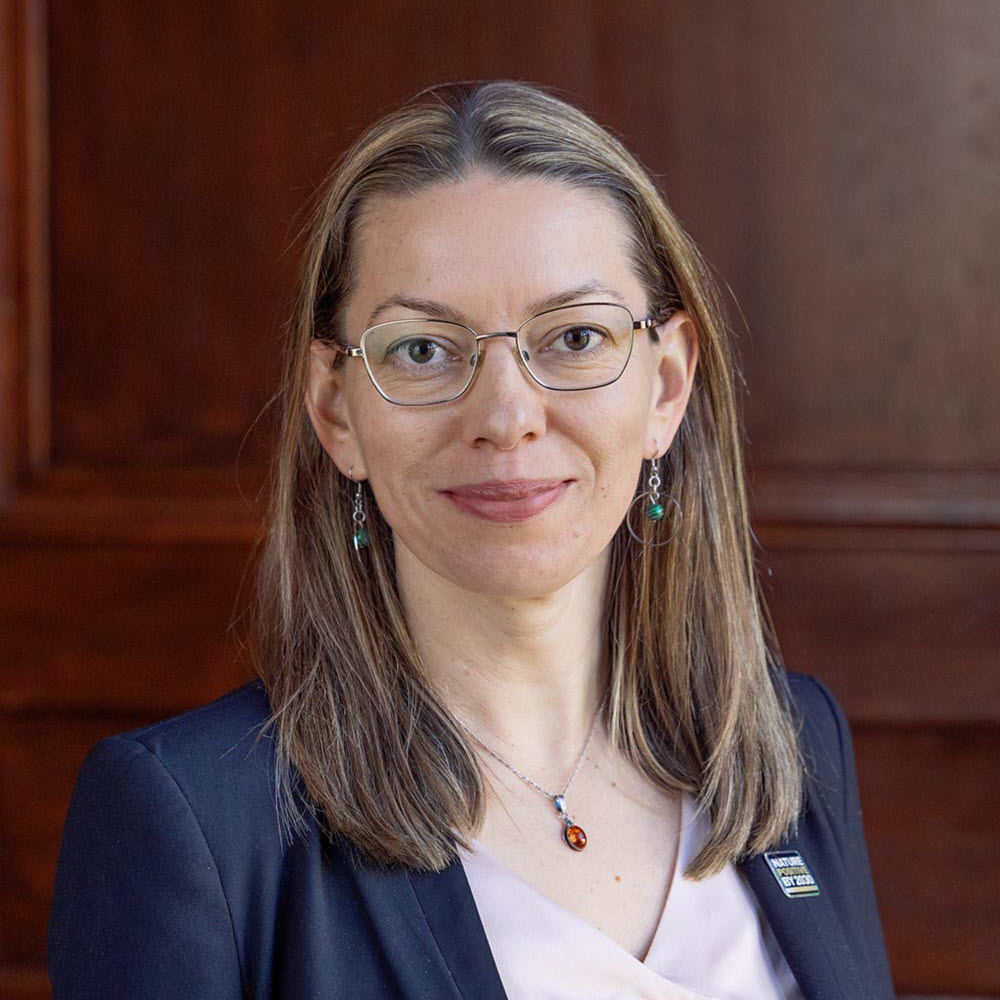
When you see large companies actively seeking out this data and wanting to take action on their impacts on nature, that can only give you hope.
Where nature risk awareness is wide awake
When large corporations start asking how their operations affect biodiversity, you know their nature risk awareness is wide awake. Across banking, insurance, real estate, and industry, leading companies are actively seeking out biodiversity data. They are screening assets for nature risk, factoring ecological sensitivity into due diligence, and building nature strategies alongside their climate commitments.
For the team behind IBAT, the portal that puts the world’s most authoritative biodiversity datasets into the hands of business, that emerging shift is genuinely exciting, even hope inspiring.
We spoke with IBAT Managing Director Nitika Agarwal and Partnerships Lead Joanna Karlic, who explained how IBAT data infuses scientific rigour into the business case for biodiversity.
Why should organisations care about biodiversity loss and nature risks?
Nitika Agarwal: “Actually, it’s almost farcical to view the economy as separate from nature. Fifty percent of the global economy is highly or moderately dependent on it, and if you take away that qualifier, ultimately all of it is.
In the World Economic Forum’s most recent risk report, biodiversity loss and ecosystem collapse are among the top risks over a ten-year horizon, along with extreme weather events. Companies need to understand that nature risk can create material financial risk, through physical risk, transition risk, and the evolution of future regulation, liability, and reputational risk.”
What is IBAT and why is the data relevant for companies?
Nitika Agarwal: “The IBAT Alliance represents some of the world’s most authoritative conservation organizations, who produce foundational datasets on biodiversity. Our Integrated Biodiversity Assessment Tool is the portal through which we make three key datasets accessible for commercial use.
The World Database on Protected and Conserved Areas is compiled with the bodies that hold legal authority to designate protected areas. Key Biodiversity Area nominations are validated by a secretariat hosted by BirdLife International. Each of the 160,000 entries on the IUCN Red List of Threatened Species, is peer-reviewed by scientific experts globally. That governance, along with the global reach and data consistency, are among the reasons why TNFD and CSRD to name a few, and IFC, the International Finance Corporation, recommend these datasets.”
Joanna Karlic: “To us, authoritative is not just a buzzword. Beside the rigorous validation, these datasets are also regularly updated, which matters for annual reporting. For companies, it’s important that the data referenced today will be consistent in four years’ time.
Because IBAT data is continually curated and validated by leading conservation organisations, users can trust these datasets will continue to provide authoritative insights well into the future.”
At a glance: the data behind IBAT
Dataset
What it covers
Key facts
WDPCA: World Database on Protected and Conserved Areas
WDKBA: World Database of Key Biodiversity Areas
IUCN Red List of Threatened Species (incl. STAR)
How would a bank or insurer use IBAT data in practice?
Nitika Agarwal: “Typically, a bank starts by locating assets, then screens across the three datasets. Are any operating within protected areas? That is a legal risk today. Are any in or near Key Biodiversity Areas? That is biodiversity risk and future regulatory risk. The STAR metric then gives a single quantitative score to identify hotspots. The same screening can be run pre-acquisition, during due diligence.
For insurers, the asset location is usually known precisely, so screening focuses on triggering enhanced due diligence and benchmarking against underwriting policies. An insurer might decide not to underwrite assets near a UNESCO World Heritage Site, for example. They can use IBAT data to check every asset against that policy.”
What about corporates?
Nitika Agarwal: “Many companies start by asking what services they depend on, such as pollination, fresh water, clean air. IBAT becomes most useful when they recognise that healthy ecosystems are what underpin those services, and biodiversity is the best indicator of a healthy ecosystem.
There is also a self-interest angle. Even if the priorities of a given company do not extend to species restoration, most would wish to avoid harm and certainly extinction.”
How serious are nature risks compared to climate risk?
Nitika Agarwal: “Both have elements of physical risk. People tend to split climate and nature into two categories because companies are so much further ahead thinking about the physical effects of climate change. But from the perspective of conservation organisations and scientists, nature and climate risk are completely intertwined.
Take an extreme weather event such as a thunderstorm. You expect increased flooding, which falls into the category of water. Is that climate or nature risk? And if a wetland located in front of your capital asset reduced the impact, then degrading it makes the damage worse. Organisations are beginning to see nature and climate as interconnected risk drivers.”
Beyond risk avoidance, what is the upside managing nature risk?
Nitika Agarwal: “In addition to risk mitigation, you can also use biodiversity data to find potential opportunities to either make assets more resilient or build resilience through restoring the underlying ecosystem. Clients tell us that having a strong nature strategy helps strengthen stakeholder and investor confidence.
Research suggests that a significant percentage of man-made emissions have the potential to be captured by nature restoration, so companies investing in nature-based solutions to reduce Scope 3 emissions can also measure and report the biodiversity benefits, backed by IBAT data.”
What is Biodiversity and Nature Risk Edition?
Biodiversity and Nature Risk Edition belongs to Munich Re’s Location Risk Intelligence platform. It embeds IBAT’s authoritative datasets into the geospatial platform, so users can:
- Identify assets or sites within or near protected areas, KBAs, and biodiversity hotspots.
- Quantify and compare biodiversity risk across global portfolios using STAR scores.
- Strengthen disclosures under TNFD, CSRD, IFC, and other frameworks.
- View nature risk side by side with physical climate risk.
How does IBAT fit into Munich Re’s Location Risk Intelligence?
Joanna Karlic: “Bringing IBAT data as a layer alongside physical climate risk data is the start of a very powerful way for companies to look at climate and nature risk in an interconnected manner. Putting them in one tool reflects how the risks actually behave.”
Nitika Agarwal: “For us, IBAT sits at the intersection of science and business. So much expertise and knowledge within scientific circles could be incredibly valuable to companies if presented in the right way! With these biodiversity datasets in Location Risk Intelligence, that science is reaching the workflows where decisions are made.”
Which aspects of your work do you find most rewarding?
Nitika Agarwal: “Joining IBAT gives me the chance to meet the challenge of bridging science and business. They really are two different worlds. They operate at different timescales and speak different languages. Our mission is to take scientific rigour and turn it into actionable business insights and products for the market.”
Joanna Karlic: “To me, it feels like a pivotal moment. Biodiversity and nature are finally starting to be taken seriously in business and finance. That really matters, because this is one of the biggest challenges of our time. When you see large companies actively seeking out this data and wanting to take action on their impacts on nature, that can only give you hope.”