
Summary
Storms and flooding are among the costliest natural disasters in France and repeatedly result in high economic and insured losses. However, there are also risks that are not immediately associated with France, from record heat and severe droughts to accelerated coastal erosion. While attention is usually focused on storms and floods, this article looks at the blind spots that accumulate over time and can increasingly affect the value of assets.
Below, we present three physical climate risks for France and show how tools such as Munich Re's Location Risk Intelligence can help insurers and businesses assess risks, strengthen resilience, and make risk-aware decisions.
To explore these solutions in more detail, Risk Management Partners, a unit of Munich Re, will be at AMRAE in Deauville on 4 February 2026. Come along and see Location Risk Intelligence in action.
1. Drought and soil subsidence (clay shrink–swell)
One of France’s hazards with high loss potential is the “retrait-gonflement des argiles” (RGA), the shrink-swell of clay soils during drought and rewetting cycles. During hot, dry weather, clay-rich soils lose moisture and shrink, then swell again when rains return. This slow motion “breathing” of the ground can cause serious structural damage. Foundations shift and walls crack, rendering some homes or office buildings uninhabitable.
French government reports show that approximately 48% of mainland France lies in areas with medium to high risk of clay shrinkage and swelling, putting more than 10 million homes at risk. With Location Risk Intelligence, you can pinpoint exactly where this risk exists – down to the 5-digit postcode and even more detailed if required – thanks to a subsidence model with a global resolution of 500 metres that provides consistent, highly detailed insights into current and future climate conditions.
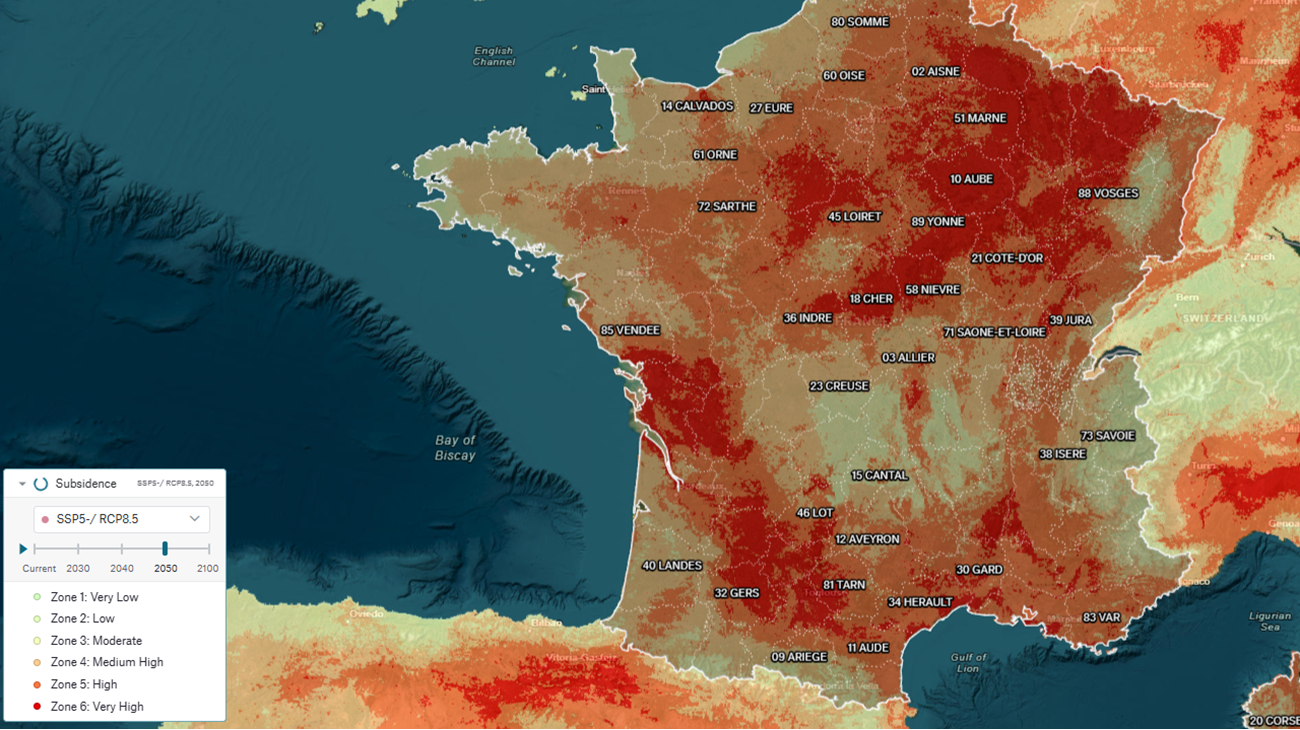
France 2-Digit Postcode Region Scoring in Location Risk Intelligence with Subsidence map overlay under SSP5-/ RCP8.5 projection for 2050.
Source: Munich Re.
2. Extreme heat stress in cities

Location Risk Intelligence lets us screen assets with only an address, assess exposure under current and future climate scenarios, and translate risk into financial implications – supporting acquisition decisions, portfolio prioritisation, and adaptation CapEx planning.
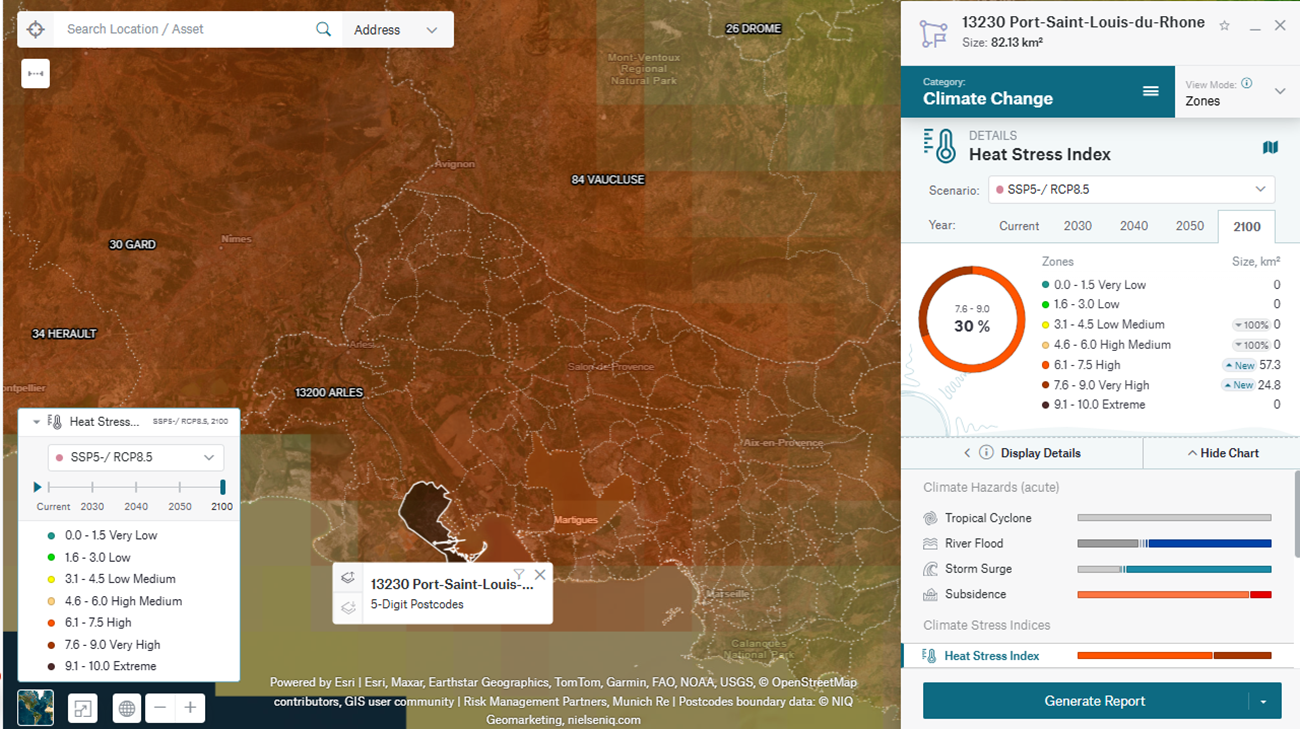
France 5-Digit Postcode Region Scoring in Location Risk Intelligence with Heat Stress Index map overlay under SSP5-/ RCP8.5 projections for 2100.
Source: Munich Re.
3. Coastal erosion and rising seas
France's long Atlantic and Mediterranean coastlines make the country vulnerable to coastal hazards, particularly ongoing erosion of the coastline and occasional flooding from storm surges. Unlike sudden disasters, erosion is slow but steady: waves and rising sea levels gnaw away at dunes and cliffs season after season.
Climate change, along with local geology, acts as a powerful accelerator. Global mean sea level has risen by an average of about 21–24 cm (8–9 inches) since the late 19th century, and the rate of rise has increased in recent decades. Higher sea levels allow waves and storm surges to penetrate further inland, eroding sandy coasts and undermining cliffs that were once stable. Soft, sandy coasts are particularly vulnerable, such as the beaches of Aquitaine in the south-west. Further north, the chalk cliffs of Normandy are also subject to progressive decline.
It is important to note that local relative sea-level change varies by coastline due to factors such as land subsidence or uplift and ocean dynamics, meaning impacts differ by region.
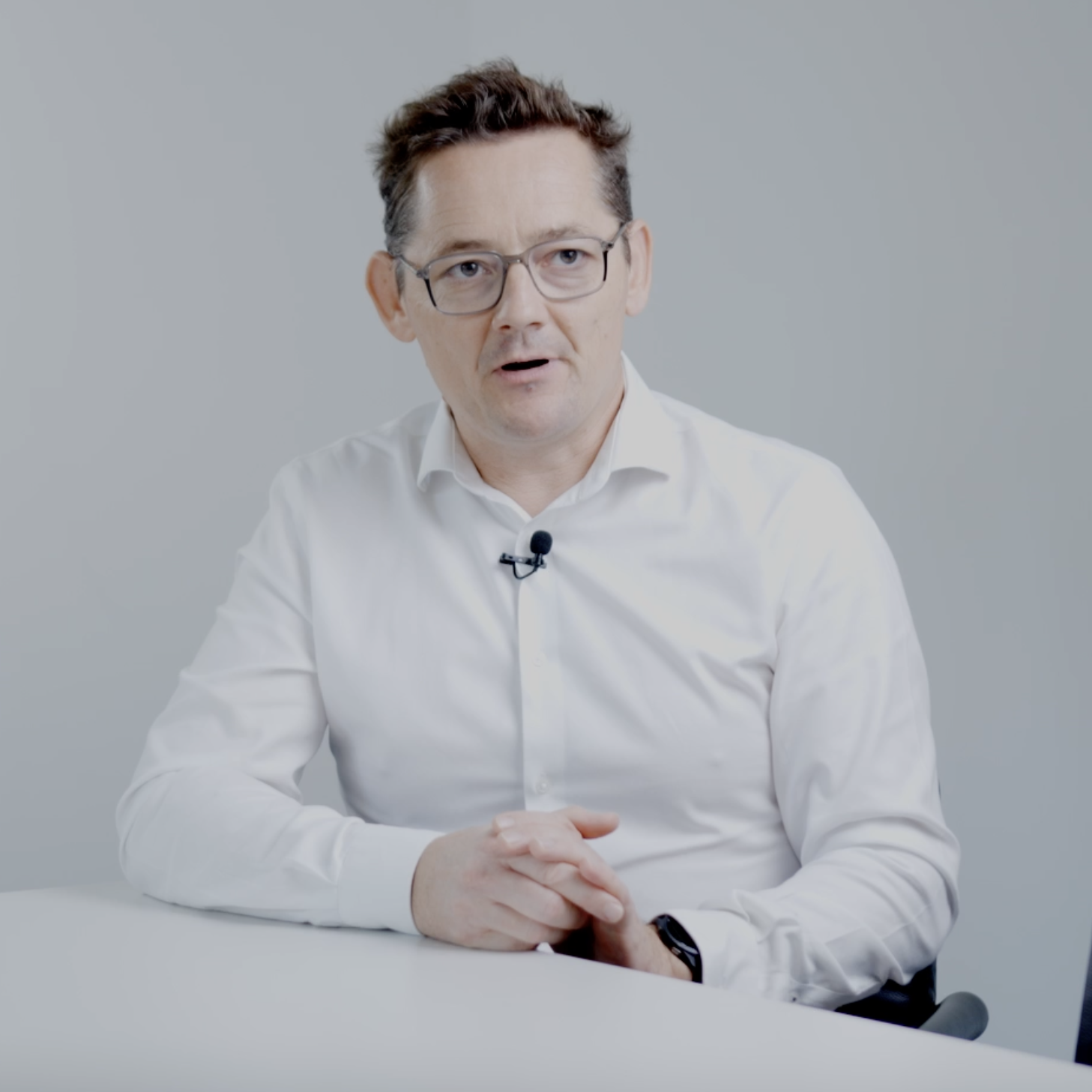
Location Risk Intelligence helps us explain hospital climate exposure with a clear, expert scoring – so we can prioritise prevention, align stakeholders, and strengthen resilience across our portfolio.
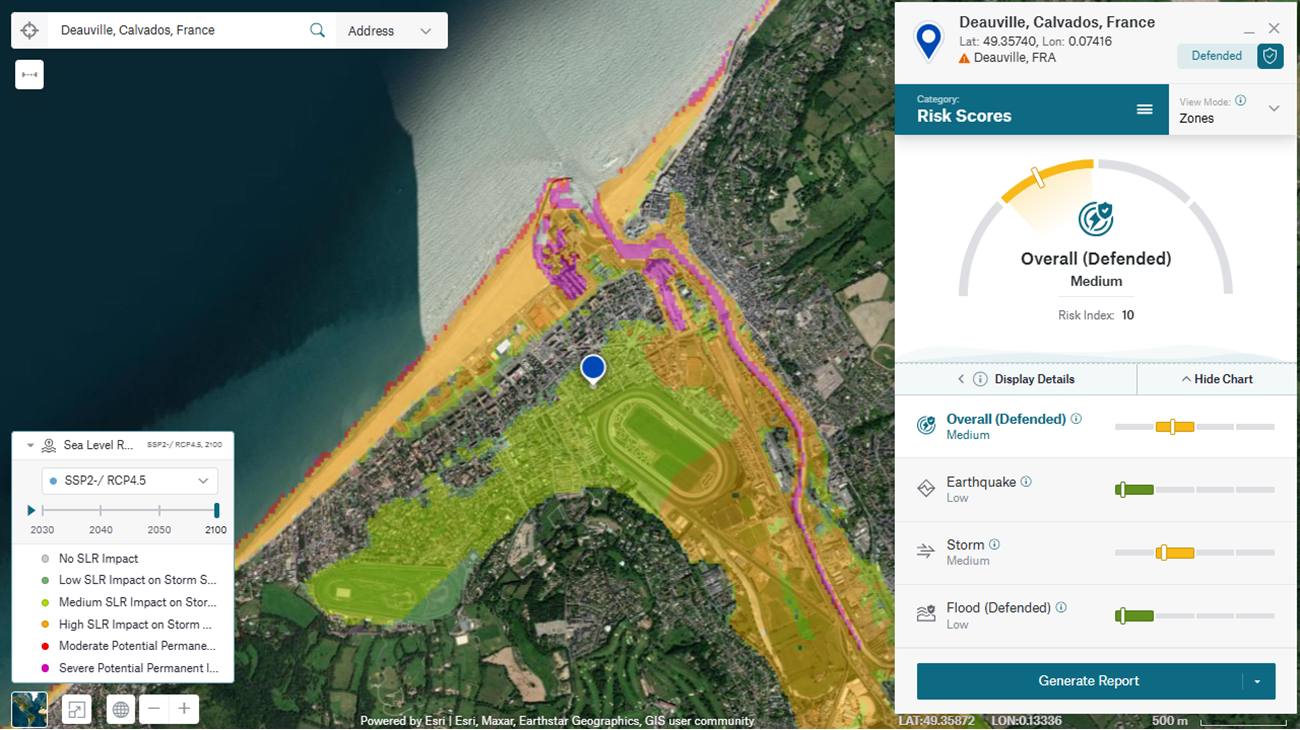
Deauville, France in Location Riks Intelligence with Sea Level Rise map overlay under SSP2-/ RCP4.5 projections for 2100.
Source: Munich Re.
Building resilience with Location Risk Intelligence
For banks and insurers, the real challenge is not acknowledging that climate risk is rising, but embedding it into everyday decisions across portfolios. Location Risk Intelligence lets risk teams screen exposures at scale, compare today’s risk with future risk under different climate scenarios, and translate hazards into decision-ready outputs for underwriting, lending, investment, portfolio steering, and reporting.
In practice, this creates clearer prioritisation (where to act first), more consistent communication across internal stakeholders, and a faster path from assessment to action, such as portfolio rebalancing, adjustments to investment planning, and risk-based pricing or limits.

French insurers and banks are increasingly concerned about physical climate risks. What we do with Location Risk Intelligence is give them a risk intelligence dashboard, so they can see at a glance where their exposures are and how those might evolve under climate change. This ability to visualise and quantify risk makes it much easier to take action, whether it’s adapting underwriting guidelines or investing in resilience measures.