See our solution in action!

Summary
In 2025, global natural disasters once again resulted in insured losses exceeding US$ 100bn. What makes this year notable is not a catastrophic hurricane season, but the cumulative impact of non-peak perils, particularly wildfires and severe convective storms across North America. According to Munich Re’s NatCat figures for 2025 these losses reflect a structural shift in climate risk. Smaller but frequent events are increasingly driving overall loss totals.
The key question for 2026 is therefore not what happened, but what should organisations do next. At Risk Management Partners, we believe that executives who move from risk awareness to implementing resilience measures can protect enterprise value, strengthen operations, and make more informed investment decisions. This article outlines the 2025 loss drivers and presents three practical steps to take using Location Risk Intelligence.
2025 natural disaster losses: what the NatCat figures reveal
The NatCat data for 2025 show that losses can exceed US$ 100bn even without a major U.S. hurricane landfall. The year could have been even costlier had peak-peril hurricane landfalls materialised. Peak perils remain responsible for the largest, most volatile extremes, while non-peak perils increasingly drive the loss trend as they accumulate across geographies, asset classes, and portfolios – particularly in the United States.
Wildfires and severe convective storms were responsible for a disproportionate share of losses. These events often fall below executive radar because they are perceived as regional, seasonal, or operational issues rather than balance-sheet risks. However, when occurrences are repeated across large asset footprints, their financial impact becomes material.
This trend reinforces a critical reality for risk leaders: loss frequency now matters as much as loss severity. Understanding this shift is essential for setting priorities in 2026 and beyond.
| Date | Country/Region | Event | Overall losses |
|---|---|---|---|
| 7.1 – 10.2.2025 | United States | Wildfire (Palisades Fire, Eaton Fire) | US$ 53bn |
| 28.3.2025 | Myanmar, Thailand, China, Vietnam | Earthquake | US$ 12bn |
| 23. – 30.10.2025 | Jamaica, Cuba, Bahamas, Dominican Republic, Panama, Haiti, Puerto Rico | Hurricane Melissa | US$ 9.8bn |
| 14. – 17.3.2025 | United States | Severe storm | US$ 9.4bn |
| 23. – 29.7.2025 | China | Flood | US$ 5.8bn |
/Christof_Reinert.jpg/_jcr_content/renditions/crop-1x1-768.jpg./crop-1x1-768.jpg "Christof Reinert")
Munich Re’s NatCat figures for 2025 show that major loss years no longer depend on a single peak peril. Non-peak perils can add up fast, especially across North America. That is why resilience matters, and why it starts with clear priorities, thresholds, and decisions.
Action step #1: Use risk intelligence to identify exposure
By overlaying event footprints with asset locations, Location Risk Intelligence makes exposure visible at the level where decisions are made. Organisations can identify which sites fall within impact zones and detect clusters of exposure. In this way, managers can prioritise locations that drive portfolio-level risk.
Crucially, reviewing multiple events over time creates a feedback loop. Teams are able to learn from repeated impacts and refine any preparedness measures. This experience builds confidence in decision-making when the next non-peak peril season arrives.
Slideshow: “The big three of 2025” in Location Risk Intelligence
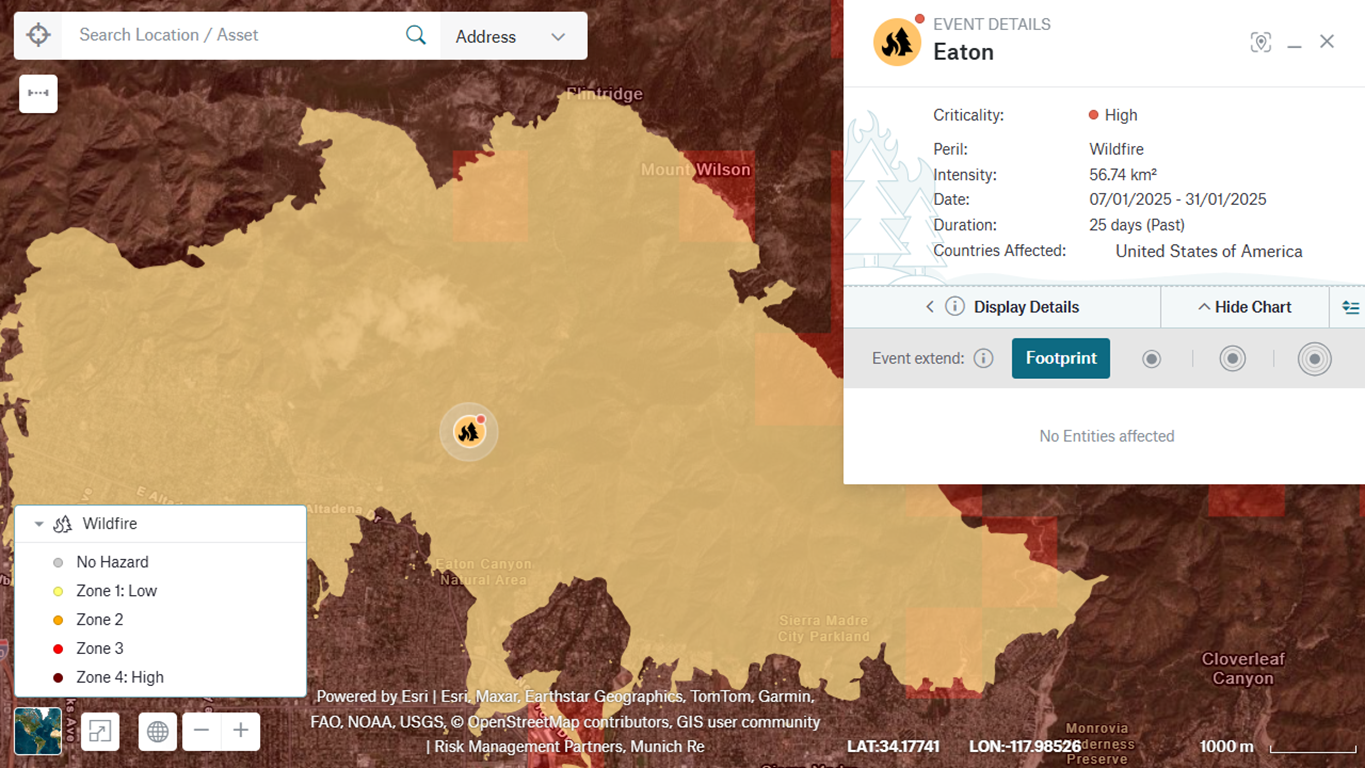
Eaton Wildfire, as seen in Location Risk Intelligence Events view

M 7.7 Earthquake, as seen in Location Risk Intelligence Events view
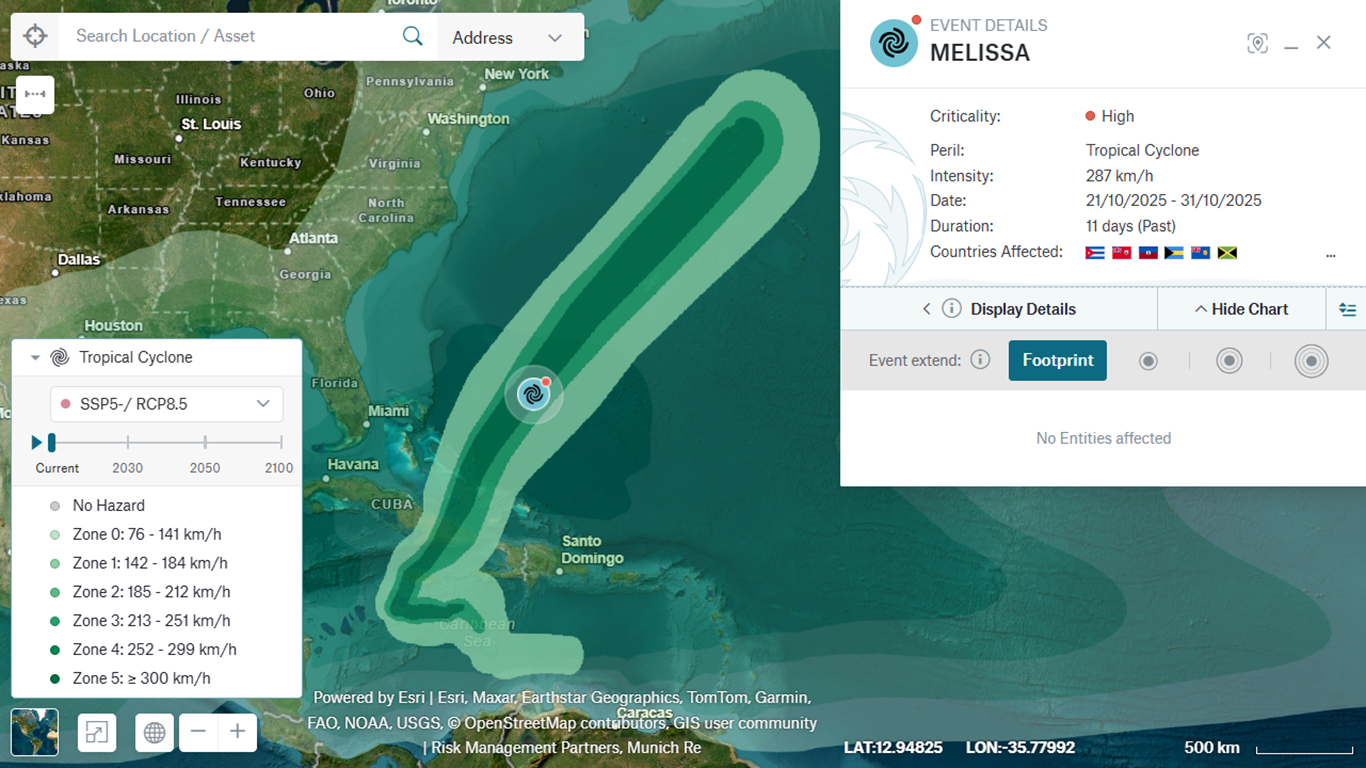
Hurricane Melissa, as seen in Location Risk Intelligence Events view
Action step #2: Treat climate change as a risk frequency multiplier
Munich Re's NatCat figures indicate that some extreme events were influenced by climate change, and studies suggest that climate change increases the frequency or severity of weather disasters, sometimes even both. Munich Re's chief climatologist clearly summarises the direction: a warming world makes extreme weather disasters more likely.
With Location Risk Intelligence's Climate Change Edition, teams can assess physical risks under various climate scenarios and time horizons up to 2100. Such data informs practical decisions, including which locations are expected to experience the greatest increases in risk, and where thresholds may be exceeded. This indicates where planning for protective measures or investments should begin.
Heat stress test: the USA under the microscope
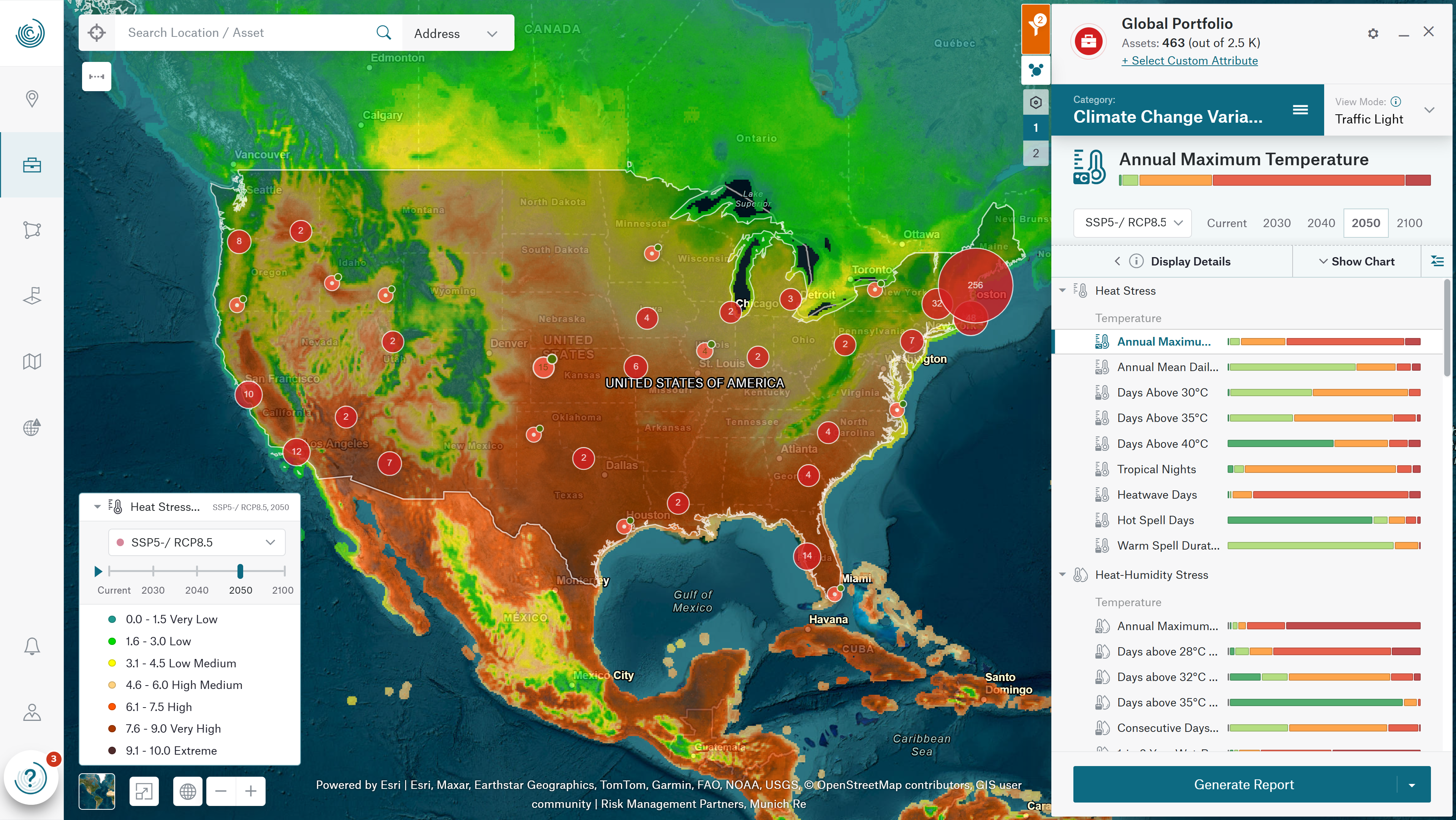
Sample U.S. portfolio assets under SSP5-/RCP8.5, projection for the year 2100, locations with Heat Stress Index between 6.1-7.5. Heat Stress Index combines several temperature-related parameters and classifies the climatological heat stress situation on a scale ranging from 0 (very low) to 10 (very high). Source: Munich Re.
Action step #3: Turn NatCat awareness into executive governance
The quickest way to lose momentum after a NatCat year such as 2025 is to view the results as context rather than direction. Leaders who translate risk awareness into clear governance accelerate their business resilience.
- Define what ‘material’ means for your business in North America.
- Set practical thresholds for non-peak risks such as wildfires and severe convective storms.
- Agree in advance what to do when thresholds are exceeded. Who makes decisions, what actions are triggered, and how quickly do teams respond?
This creates a common operating language for risk, finance, operations, and business. Risk insights become repeatable actions rather than one-off analyses.