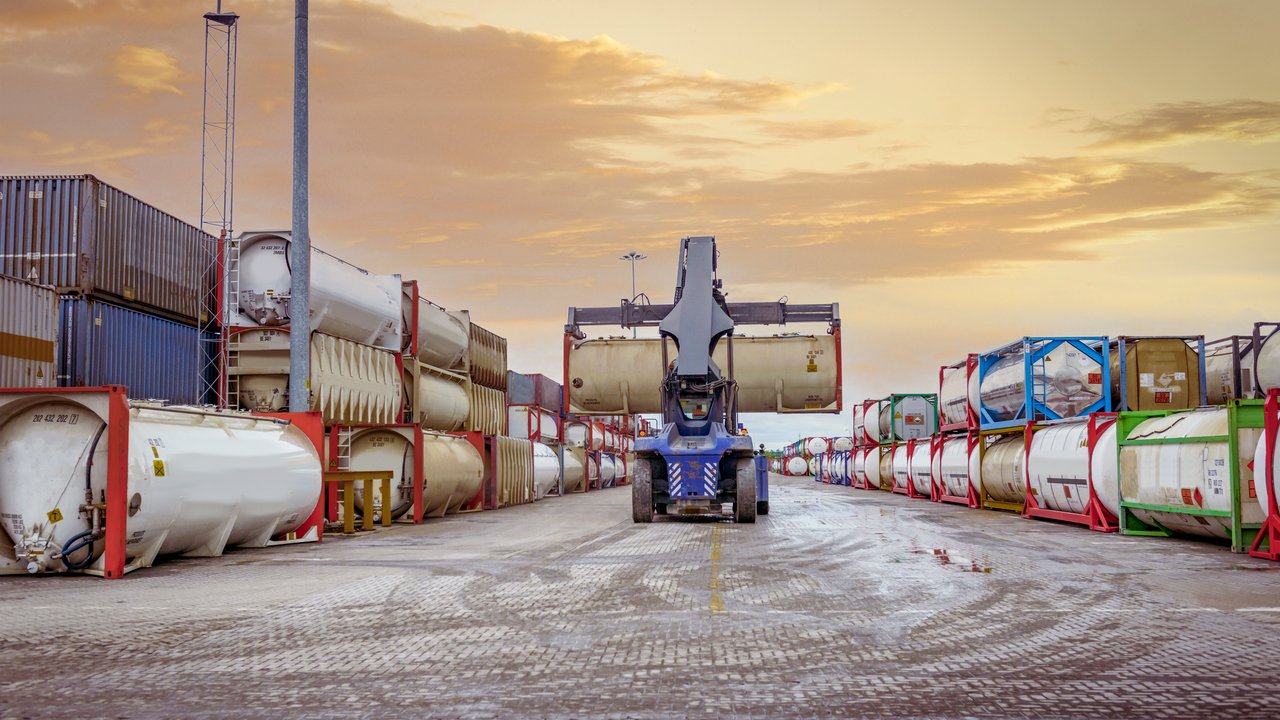
Borderless pressure: A synergistic approach to transportable pressure vessel regulations across international markets
Francis Pesek
Transportation Services Commercial Manager
Pressure Points Newsletter - December 2025
A global industry facing local complexity
In today’s interconnected world, the movement of dangerous goods (gases, liquids, and solids) across continents depends on Transportable Pressure Equipment (TPE), including tanks, vessels, and cylinders required to meet varying international and regional regulations. Yet the complexity of those requirements — spanning continents, transport modes, and approval authorities — often creates delays, duplication, and unnecessary cost. Every time transportable equipment crosses a border, operators face new challenges relating to inspection rules and restrictions, regional markings, and sometimes conflicting standards. The result is inefficiency that limits global flexibility and adds pressure to the bottom line.
A singular advantage: One partner, global reach
HSB is uniquely positioned to help you navigate complex international regulations. Headquartered in Hartford, Connecticut, and operating for more than 150 years, we support clients through a worldwide network of offices staffed by hundreds of inspectors and engineers.
We hold one of the largest global scopes for approving transportable pressure equipment and vessels. This allows us to serve as a single inspection and certification body across multiple jurisdictions — simplifying your processes and reducing the need to coordinate with multiple providers. By consolidating audits and inspections with one trusted partner, clients can optimize resource allocation, realize potential cost efficiencies, and gain greater confidence that their assets meet international standards.
Helping you optimize your inspection and certification processes
The global market requires the consideration of the different regulatory frameworks, which, under the UN Model Regulation, provide aligned requirements for the conformity assessment of cylinders, tubes, drums, cryogenic receptacles, multiple element gas containers (MEGCs), and tanks used to transport dangerous goods. There are additional variations to these requirements depending on the mode of transport (Road [ADR], Rail [RID], Sea [IMDG], and Inland Waterways [ADN]) and regional variations that introduce non-aligned requirements.
- In Europe, the Transportable Pressure Equipment Directive (TPED 2010/35/EU) provides a unified system for the Pi-mark (of equipment to permit the carriage and transport of dangerous goods between EU countries and worldwide.
- In the UK post-Brexit era, the Pi-mark ( is no longer accepted, requiring the same product to be dual certified via the Rho-mark (ρ) signifying compliance and adherence to strict safety and testing standards.
- In the United States, the Pipeline and Hazardous Materials Safety Administration (PHMSA) governs hazardous materials transport under the HMR. Recent updates have brought greater international alignment, with PHMSA now recognizing EU pi-marked vessels under defined conditions (PHMSA, 2024). Globally, the International Maritime Dangerous Goods (IMDG) Code and the International Tank Container Organization (ITCO) reinforce the same principle: Regardless of origin, transportable pressure equipment must meet consistent international benchmarks for safety, testing, and periodic inspection (ITCO, 2023).
Why synergy matters
Synergy occurs when the combined efforts of a service provider and its client produce a more substantial impact than either could accomplish individually. The benefits of synergy should be clear. A consistent interpretation of the regulatory framework delivers faster market access, fewer redundant inspections, and a shared safety baseline across operators worldwide. For companies managing international fleets, harmonized rules mean that equipment approved in one region can be deployed in another without recertification. These efficiencies are tangible less downtime, lower administrative overhead, and smoother logistics. In practical terms, synergy turns compliance from a cost center into a competitive advantage.
Complexity still remains
Despite growing convergence between major regulators, differences persist in markings, conformity methods, and inspection intervals. For example, following Brexit, the United Kingdom began phasing out automatic recognition of the EU’s pi-mark, introducing rho-mark (ρ), a new domestic conformity mark (UK Department for Transport, 2023).
Meanwhile, emerging technologies such as high-pressure hydrogen storage and composite vessels often move faster than regulatory updates. As a result, operators face uncertainty and duplication while waiting for new standards to catch up (U.S. Department of Energy, 2022). Even as harmonization expands, these evolving frontiers highlight the need for inspection partners who can navigate multiple regimes seamlessly.
Finding opportunity in the midst of complexity
These challenges may create opportunities for clients that use HSB as their inspection and approval agency because we hold one of the broadest global approval scopes, and we can function as a single inspection body with multiple certifications on behalf of our clients. This approach strives to reduce and streamline audit scheduling.
Strategic value for forward-thinking clients
As regulators continue to align their frameworks, forward-thinking companies may already be capturing the benefits. Partnering with a globally recognized inspection body delivers not just time and cost savings but also the flexibility to expand into new markets quickly.
Whether managing traditional industrial gases or entering the fast-growing hydrogen economy, these companies gain a durable competitive advantage — a streamlined compliance model that scales effortlessly across regions and technologies.
Harmonizing your requirements
Harmonization is about progress and innovation. It allows the industry to focus on technology and safety. It accelerates the adoption of cleaner energy solutions and promotes global consistency in quality and performance.
For HSB, the mission is clear: We continue to support clients through unified inspection services, expert regulatory guidance, and proactive change management as global frameworks evolve.
The borderless advantage
In a world of many borders, we provide a single, trusted path. By bringing together a complex web of global regulations under one roof, we help clients keep their products moving efficiently and effectively.
References
- PHMSA (Pipeline and Hazardous Materials Safety Administration). Hazardous Materials: Harmonization with International Standards (Final Rule, 2024). U.S. Department of Transportation, 2024. https://www.phmsa.dot.gov/regulations/federal-register-documents/2024-06956
- ITCO (International Tank Container Organization). Technical and Regulatory Guidance for Tank Containers. 2023. https://international-tank-container.org/en/technical/regulation
- UK Department for Transport. Transportable Pressure Equipment: Amendment to Conformity Assessment and Marking Requirements in Great Britain. Government Consultation, 2023. https://www.gov.uk/government/consultations/transportable-pressure-equipment-conformity-assessment-and-marking-requirements-in-great-britain
- U.S. Department of Energy. International Hydrogen Fuel and Pressure Vessel Forum. Office of Energy Efficiency & Renewable Energy, 2022. https://www.energy.gov/eere/fuelcells/international-hydrogen-fuel-and-pressure-vessel-forum
About the author
Francis Pesek | Transportation Services Commercial Manager | frank_pesek@hsb.com
Frank Pesek joined HSB in 2008 after serving eight years in the United States Navy and earned a Nuclear Engineering degree from Thomas Edison State College while serving aboard the USS Carl Vinson (CVN-70). He was a chemist and radiological controls technician on the reactor plants, a work center supervisor, and part of many nuclear cleanup evolutions while serving in the U.S. Navy.
Frank started with HSB as an Authorized Inspector and qualified Nuclear Authorized Inspector, where he performed client-facing inspections for six years. In 2014, he transitioned to the Sales Support team in a global project management role. His experience as a field service staff member allowed him to excel as the single point of contact for many global projects while directing the design, inspection, and certification of each project. Frank has since transitioned into the role of Transportation Commercial Manager, marrying his technical knowledge with the business development and sales focus developed throughout his career. As the business development lead and part of a highly technical and accomplished global team, Frank is tasked with growing a very niche market for HSB | Global Inspection and Engineering Services.