Droughts and heatwaves
Dangerous consequences of climate change
Climate change is already leading to more frequent and more severe droughts and heatwaves in many regions worldwide. And the worse global warming becomes, the more drastic the impacts will be.
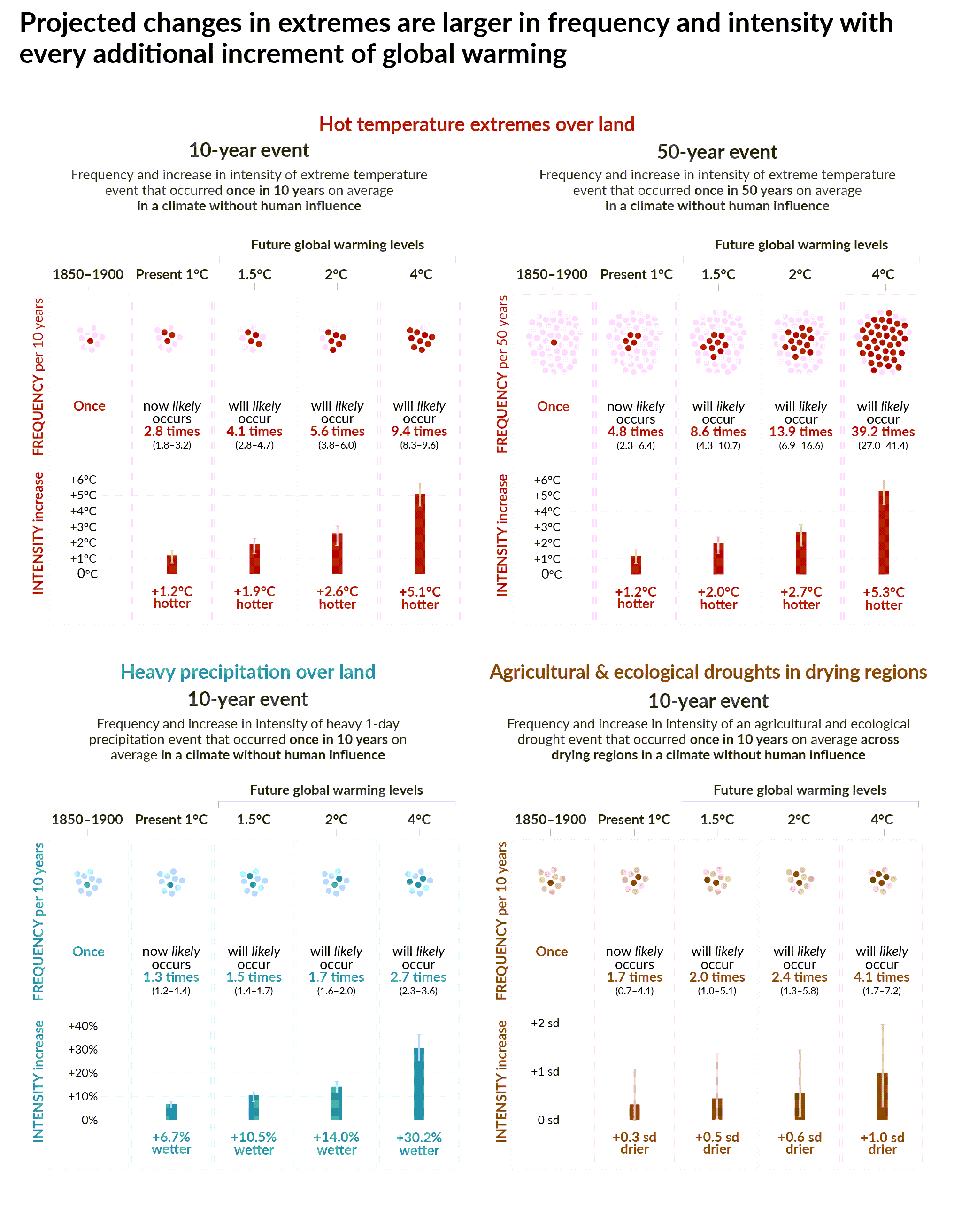
Source: Figure SPM.6 in IPCC, 2021: Summary for Policymakers. In: Climate Change 2021: The Physical Science Basis.
In its latest assessment report, published in 2021, the Intergovernmental Panel on Climate Change (IPCC) cited droughts and heatwaves as events that would occur statistically once every ten years in the absence of climate change. Their data indicated – at the time of publication, when the climate was warmer by roughly 1°C – that agricultural droughts were occurring almost twice as frequently than in the pre-industrial era (1850–1900). And if Planet Earth warmed by 2°C or even worse by 4°C, the change would be far more pronounced.
And the repercussions are even greater during heatwaves. Periods of high temperatures that, without climate change, would occur once every ten years had become 2.8 times more frequent and 1.2°C warmer on average. If global warming continues, heatwaves will become many times more likely and much hotter.
In North America and large parts of Europe, several prolonged heatwaves in 2026 once again gave a foretaste of what the future holds in store. In much of Europe, national heat records were broken as early as June, which is not the hottest month on average. Some studies found that the most recent European heatwave would have been around 3.5°C cooler had it occurred 50 years ago. Moreover, Europe is among all continents experiencing the greatest rise in temperature due to climate change, at twice the global average.
And according to a different analysis, a June heatwave in the US led to heat indices (reflecting both temperature and humidity) that would have been virtually impossible without climate change. Humid heat is considered particularly stressful and dangerous for humans and animals alike.
The worst impacts of heat and drought
Heatwaves: an invisible, deadly danger
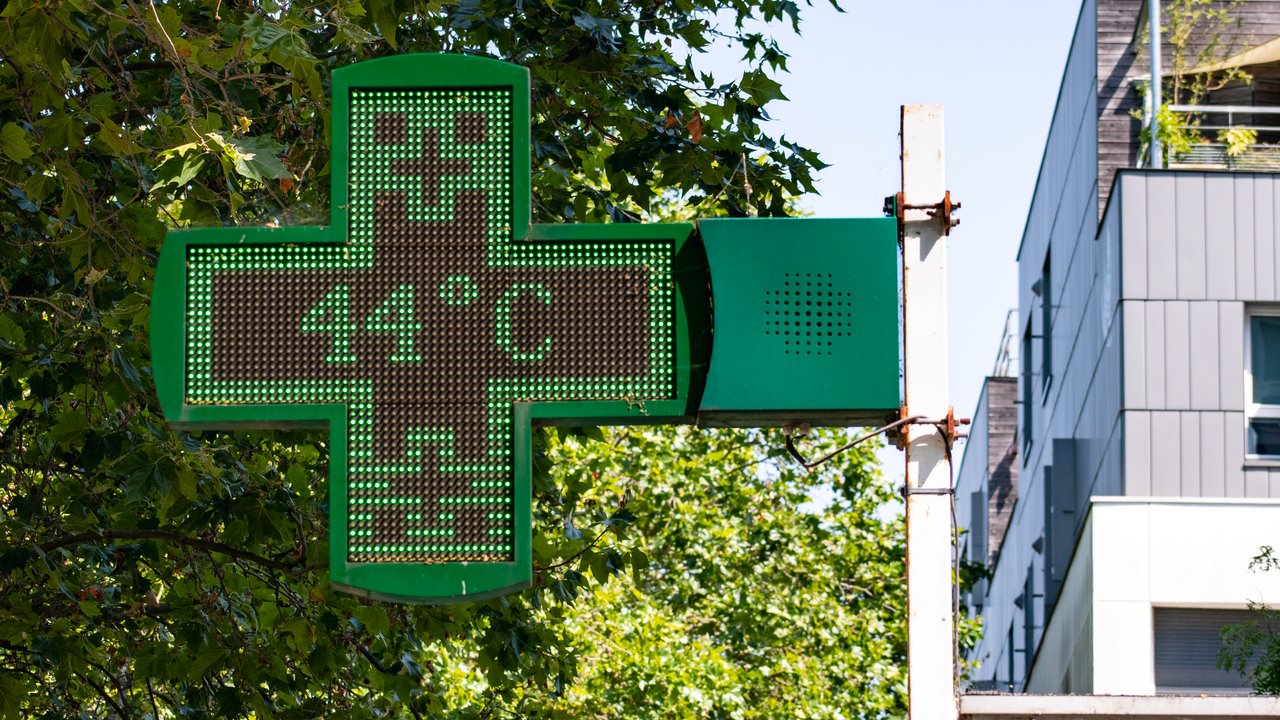
Heatwaves are considered the deadliest of all natural hazards. According to Robert Koch Institute estimates, around 12,000 people in Germany alone had perished by early August due to 2026 heatwaves.
According to the European Environment Agency, heatwaves were responsible for 95% of weather-related deaths in Europe between 1980 and 2023. And agency data indicates that heat-related mortality has risen by some 30% over the last 20 years. The World Health Organisation (WHO) estimates that the number of people exposed to heatwaves rose by 125 million between 2000 and 2016.
Crop failures and wildfires
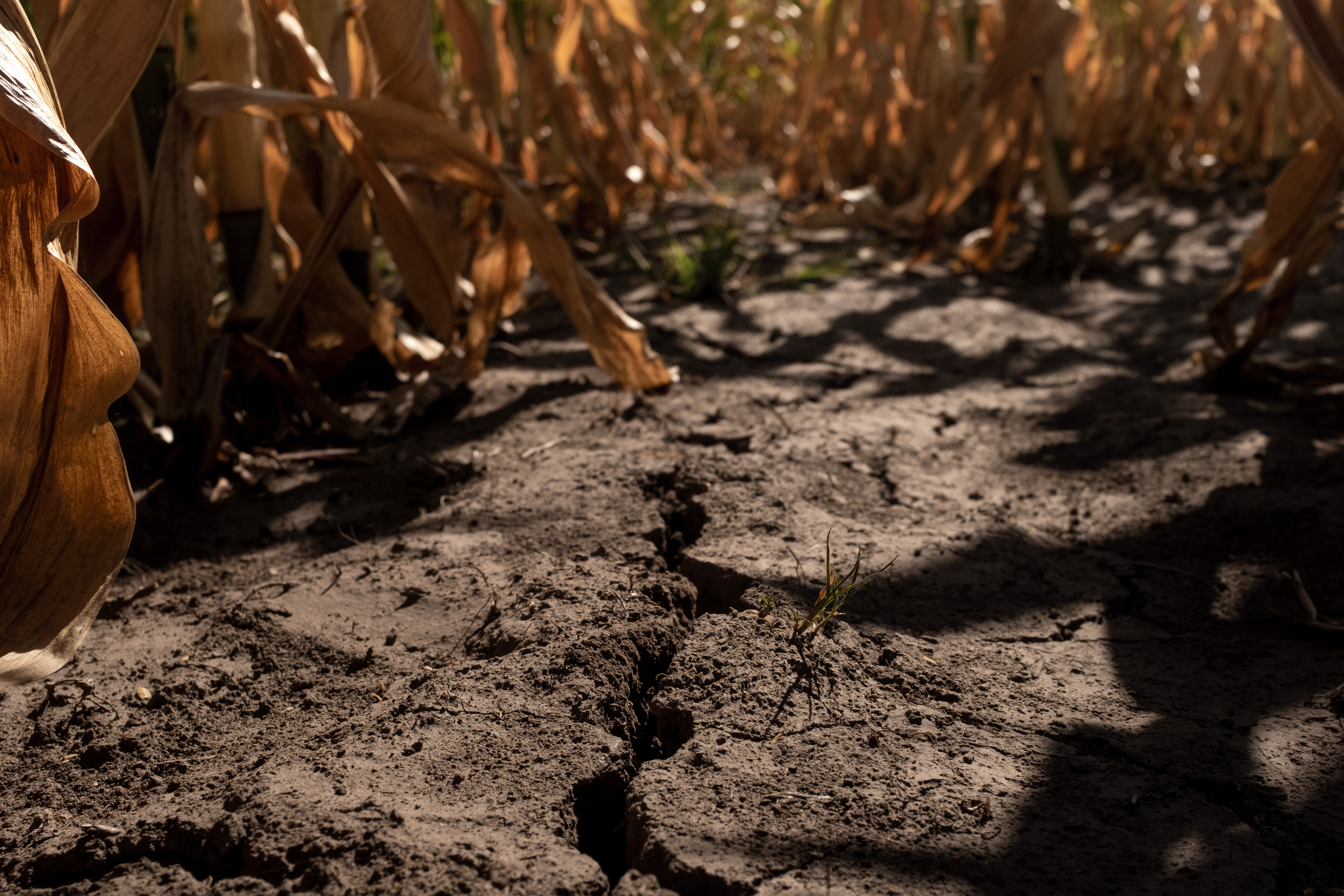
Heatwaves frequently cause droughts, or exacerbate them. According to the WHO, around 55 million people worldwide are affected by droughts every year. But heat is not the only culprit for severe droughts, which can also be triggered by a winter with very little precipitation.
It is not only subtropical regions that are affected by increasingly frequent and/or severe droughts. As a result of global warming, droughts are now affecting regions of the world that were previously not susceptible to extended dry spells.
Prolonged periods of drought result in significant losses due to crop failures and wildfires. As the latter result in higher insurance claims, insurers must closely monitor wildfire risks, which are clearly becoming more widespread as a result of climate change.
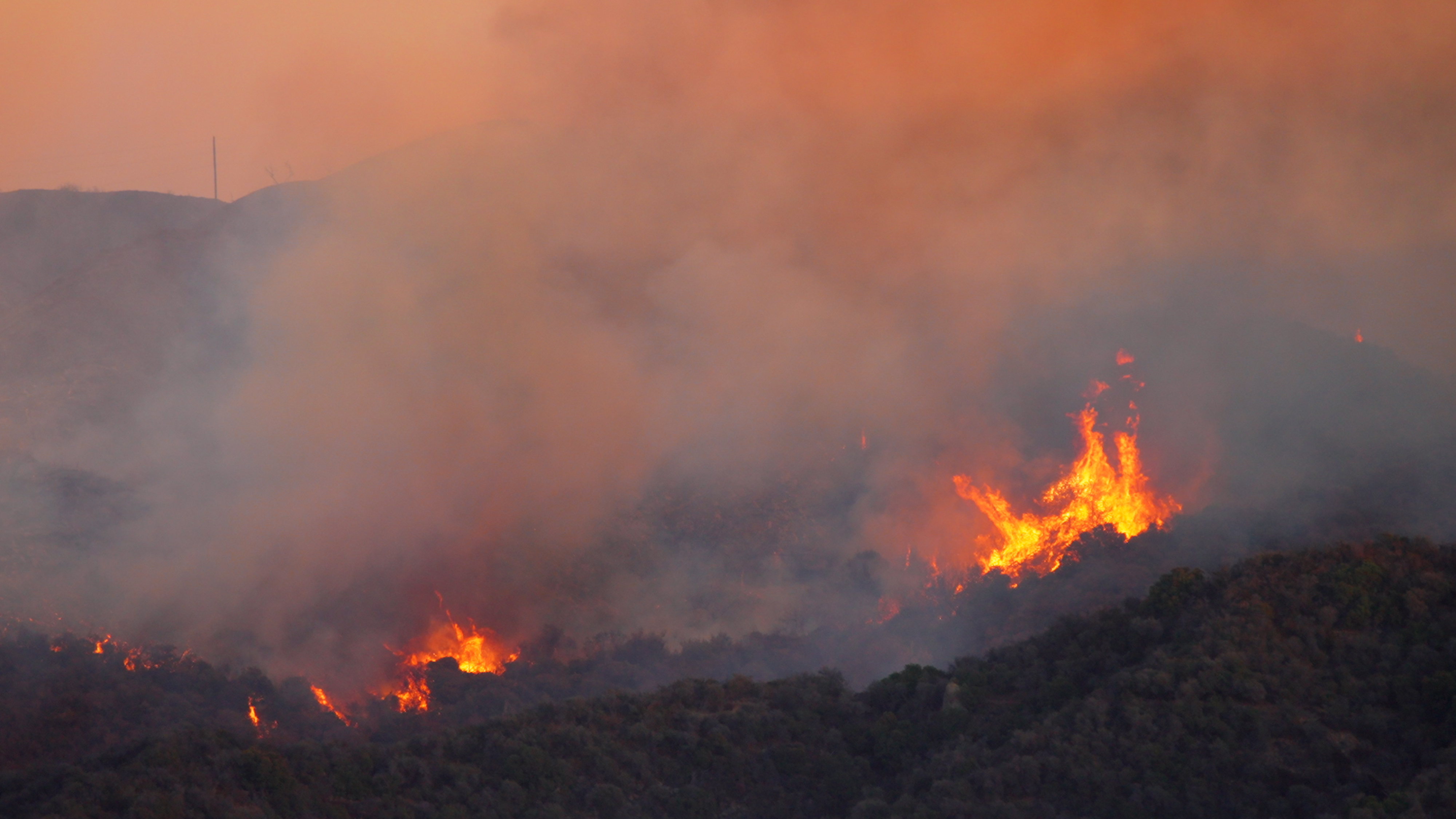
In January 2025, catastrophic wildfires reduced vast swathes of the Los Angeles area to rubble and ashes. This was preceded by a hot 2024 summer and a long dry spell that lasted well into the cooler months. The LA wildfire was the costliest of all time, with total losses of US$ 54bn (adjusted for inflation), of which US$ 41bn was insured.
And in 2026 extreme wildfires occurred in Spain and France following prolonged heatwaves in June and July. At one point, there were concerns that the fires might also reach the Spanish capital of Madrid and the Bordeaux metropolitan area in south-western France. Hundreds of thousands of people were evacuated because of the fires. By early August some 500,000 hectares had burnt in Europe – two and a half times the average of the previous 20 years.
In South America, prolonged drought from 2019 to 2022 caused billions in losses in Argentina, Brazil, Paraguay and Uruguay. Just in 2022 in Brazil alone, crop losses totalled well over US$ 10bn.
Heatwaves and droughts are straining national economies
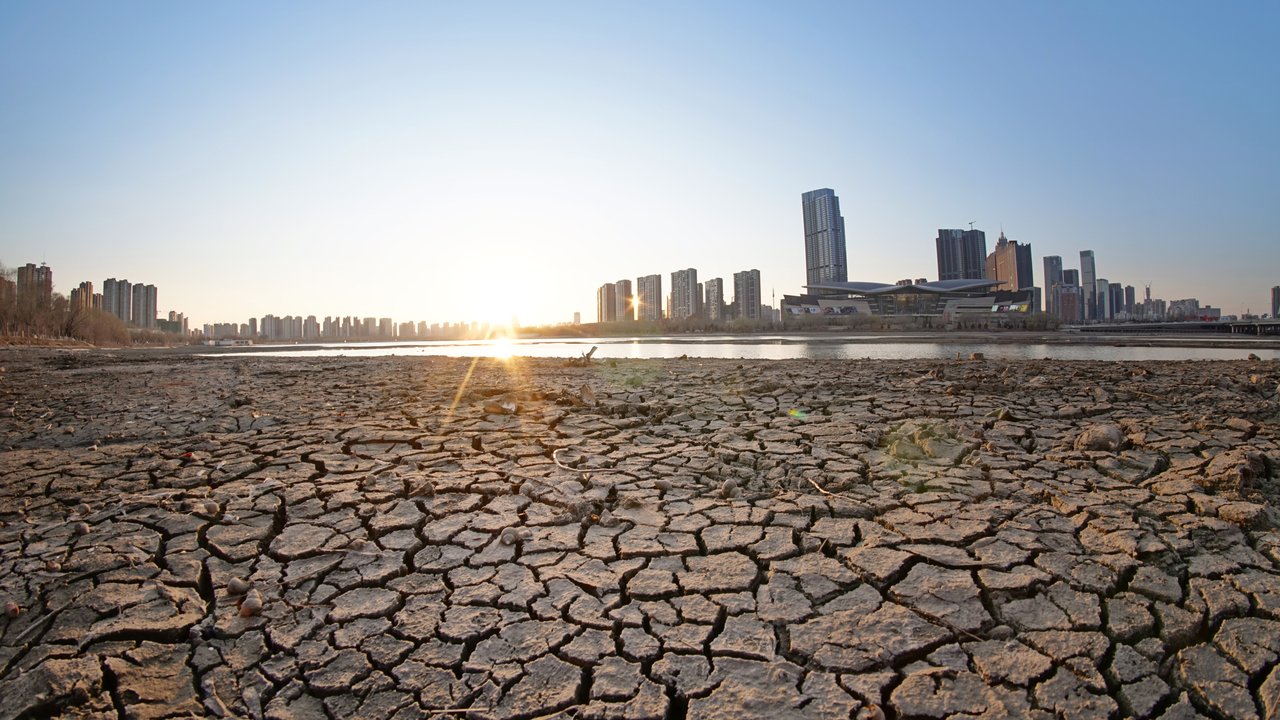
Studies indicate that very high temperatures reduce labour productivity. An OECD study based on company data from 23 developed economies found that ten additional days of temperatures above 35°C lead to an average drop of 0.3% in annual labour productivity. This is roughly equivalent to the impact of energy prices rising by 5%. And heat stress worsens for people as humidity increases.
Low water levels in waterway infrastructure may, under certain circumstances, impede or preclude the transport of people and goods. In 2018, drought and low waterway levels dampened the growth of industrial production in Germany according to this study by 0.8 percentage points in Q3 and by 0.4 percentage points in Q4.
Due to insufficient precipitation, the Panama Canal Authority imposed limits from June 2023 on the number and size of ships using the waterway. Many watercraft consequently had to take long detours, in turn significantly elevating costs.
In July and August 2026, water levels of many European rivers fell to new lows due to heatwaves and droughts. It is not yet possible to reliably estimate losses or economic impacts.
Simply put, heatwaves and droughts result in catastrophic environmental damage, economic losses and societal impacts. Crops are destroyed time and again and the risk of wildfires keeps rising. River levels are increasingly too low, triggering billions in costs for goods transporters and industrial producers. The number of heat-related fatalities is alarmingly high and, without further adaptation measures, will continue to rise.
Reinsurance solutions


Industry solutions




Contact our experts