Learn more about how Munich Re Specialty – North America is turning challenging property risks into opportunities

Global natural catastrophe losses in 2025 amounted to approximately $232 billion (inflation-adjusted), of which insurers covered around $114 billion, according to Munich Re, with weather disasters accounting for 92% of all 2025 losses and 97% of insured losses.
As we head further into the summer months, there’s one particular rising threat that’s on the minds of many sector professionals — wildfires. The January 2025 wildfires in Southern California generated $41 billion in insured losses, with $28 billion of losses coming from homeowners claims alone. Now, with a possible El Niño on the horizon, people in many regions are looking with trepidation at what the next few months could bring.
In a recent interview with Insurance Business, Bryan Wood, Property Catastrophe Risk Lead and Meteorologist at Munich Re Specialty, revealed that right now climate change is a core topic for everyone in the industry, especially with regard to how it could trigger Nat Cat events in the years to come.
“Climate change is top of mind,” he told IB. “And how it’s modifying the atmosphere, driving the heat and dryness. When I was completing a damage survey last year, I spoke with a firefighter who revealed that while he’s been doing his job for 30 years, it’s only in the last decade that he’s noticed real weather change. At night, for instance, when firefighters could take advantage of the cooler evenings to bring the fires down, they’re now dealing with 10 or 20 degree-warmer conditions. That advantage of cooler evenings no longer exists, meaning fires can be harder to contain.”
Historically, the summer months were seen as the typical “wildfire season”; however, thanks to rising temperatures, longer summers, and shorter winters, there are no set timelines anymore. As Wood told IB, thanks to changes in climate, wildfire season is much, much longer now.
“We’ve had fires near Santa Rosa, California, recently. We also just saw one in Phoenix in one of the suburbs along the dry riverbed, and we’ve had some in New Mexico,” added Wood. “Wildfire season is already starting in certain places.”
And, as Wood pointed out, recently there’s been an influx of people moving into the Wildland-Urban Interface (WUI) as well — with California and Nevada offering a lot more affordable housing options in these areas.
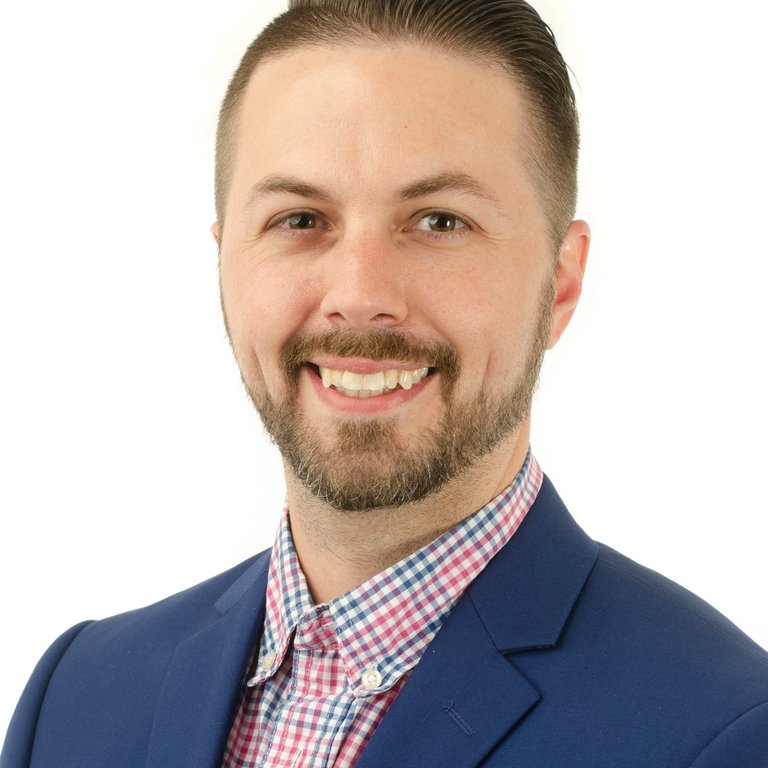
We're seeing more [properties] being built in the Wildland-Urban Interface and close to the coast where the areas are higher risk and the peril itself is changing at the same time. And that's a big deal. Then, of course, there's the rising cost to replace any kind of building — whether it's a home or commercial property, the general inflation of building supplies and replacement cost is going up.
El Niño: a rising threat in 2026
Looking at the perils regionally, there’s been an uptick in the number of wildfires in the Southeastern US this spring. As of mid-May 2026, US wildfires had burned nearly 1.9 million acres nationwide, with more than 25,500 fires recorded — significantly above the 10-year average of 17,713 fires and approximately 1,052,600 acres for the same period. Going state by state, Florida has been the hardest hit. Fires burned through nearly 120,000 acres so far this year, after the intensity and extent of drought ratcheted up starting in January 2026, according to NASA. But what’s fueling this? Well, according to Wood, it’s a lack of precipitation mixed with the El Niño threat.
“We’re moving toward a very strong El Niño this year that typically will bring a lot of rain into the Southeastern US and Florida,” added Wood. “However, when you’re on the opposite side of that, it tends to be a little drier in winter. One of the more interesting things here is that those Georgia fires we had recently happened in areas where Hurricane Helene knocked down a lot of forest. [What’s more], the same thing occurred in the mountains of North Carolina and South Carolina where 800,000 acres of forest were lost. All these dead trees sitting there just waiting to be ignited.”
A community initiative: reframing wildfire protection
With all of the chaos and catastrophe of 2025, there also have been many lessons learned for insurance professionals. For instance, as Wood told IB, after surveying the damage left behind by the California wildfires, he was struck by how these events are much more of a community risk compared to hurricanes or tornados.
“Once wildfires leave the vegetation or the mountains, those neighborhoods are bumped up against, you really don’t have a true wildfire anymore,” he told IB. “It’s just a fire burning from building to building. It’s no longer wildfire, it’s just conflagration — meaning there’s a much larger relative fire impact because it’s the buildings burning compared to vegetation.
“There’s also more heat generated because there are building materials on fire not forestation. [What’s more], the flame length is longer, meaning the smoke is more dense. [As such], when you have all these homes packed together, once one home goes, you‘re left with a lot of heat being generated, which can catch the next house on fire.”
It’s the terrifying force of this domino effect that makes wildfires that spread into those neighborhoods so difficult to contain. And, as Wood told IB, it’s no use having just one house on the street properly resilient against these fires, because it only takes a single weak link to bring the whole neighborhood down.
“You’re only as strong as your weakest link”
“We saw a home close to the ocean near Malibu in the Palisades that we would have considered a really good risk,” added Wood. “It was a concrete building with a metal roof — there were no areas where you would consider embers could get in. This house had a vinyl glass garage door facing toward where the fire was coming from — a four-story house opposite it. Now that house on fire isn’t just a house — it’s four stories of material burning just 30 feet away.
“Eventually, this glass door melted and the flames got in and the embers got in. They had wooden floors, and it burned from the inside out. With buildings, whether it’s a home or an industrial building, you’re only as strong as your weakest link. In this case, the vinyl glass has a much lower melting point than traditional glass or a standard garage door. You could have a really well-built exterior, even a flat roof, but you’re only as strong as what surrounds you. If you have better homes and buildings surrounding you, and vegetation is well-kept and away from these buildings, the odds of your property catching on fire decreases.”
It all comes back to this notion of wildfire protection as a community-driven mindset. It’s not enough, as Wood pointed out, to ensure your own home is secure — it’s about approaching wildfire risk and subsequent coverage as a neighborhood.
“This takes community involvement,” added Wood. “The Insurance Institute for Business and Home Safety is building two brand new communities in areas that are pretty risky for wildfire. However, they are building every home to IBHS Wildfire Prepared Home standards. So, essentially, if a fire is burning on the hillside and vegetation near homes, it’s very unlikely that the homes will catch fire.”
At the end of the day, Wood is adamant about one key aspect here — that meaningful change will be driven by communities.
“This is easier to do with brand new neighborhoods, because you are building everything from the inside out. However, I met some homeowners from the Palisades recently at a conference who were asking what they can do to make their homes more insurable and make sure that this doesn’t happen again. They were discussing things like community involvement, where everyone is taking care of vegetation, or where you have multiple types of capital insuring.“
There are a lot of options out there, as Wood told IB, and he firmly believes that proper insurance is part of the overall solution.
“I think you’ll see insurers, local governments, and the insured themselves getting more creative on coverage options and having things like mitigation credits where, if an entire neighborhood is taking care of their homes, it might lead to discounted premiums or reduced deductibles. Incentivization is going to be a big part of that change for existing neighborhoods moving into that type of mindset.“
Visit Munich Re Specialty’s Insights for trends and expert perspectives on specialty insurance and risk management: https://www.munichre.com/specialty/north-america/en/insights.html.
This article was created in partnership with Insurance Business AmericaOur expert