Hurricanes, typhoons and cyclones
Tropical storms – the natural hazard with the highest losses
Tropical cyclones have enormous destructive potential. Viewed over time, these storms – which are referred to as hurricanes, typhoons or cyclones, depending on the ocean basin concerned – account for the highest losses of all natural disasters.
In 2024, two extreme hurricanes (Helene and Milton) left a trail of devastation in Florida in the span of just two weeks. These two storms alone caused total losses of more than US$ 120bn (adjusted for inflation), including almost US$ 50bn in insured losses. The costliest cyclone ever recorded was Hurricane Katrina, which struck New Orleans in 2005.
~US$ 2,400bn
Tropical cyclones account for the highest losses
(1980–2025, inflation-adjusted)
Tropical cyclones usually develop from large-scale clusters of thunderstorm cells, such as those often seen over tropical oceans. They get their energy from the evaporation of surface water with a temperature higher than 26–27°C. When they reach a certain strength, they are called hurricanes in the Atlantic and Northeast Pacific, cyclones in the Indian Ocean and South Pacific, and typhoons in the Northwest Pacific.
Tropical cyclones can continue for several weeks and stretch across a vast area, while their wind speeds can reach more than 250 km/h, in some cases even exceeding 300 km/h. They mainly affect coastal regions and islands between 10° and 40° latitude north and south of the Equator. After making landfall, tropical storms quickly weaken as they track inland. However, the huge masses of water they draw from the warm ocean can cause extreme flooding and landslides.
Where there is a high density of exposed assets, e.g. in Japan or the coastal regions of the southeast US, hurricanes and typhoons often cause losses in the billions. In developing and emerging countries, by contrast, extreme tropical storms can result in humanitarian disasters with significant loss of life.
Hurricanes are one of the biggest loss drivers in North America ...
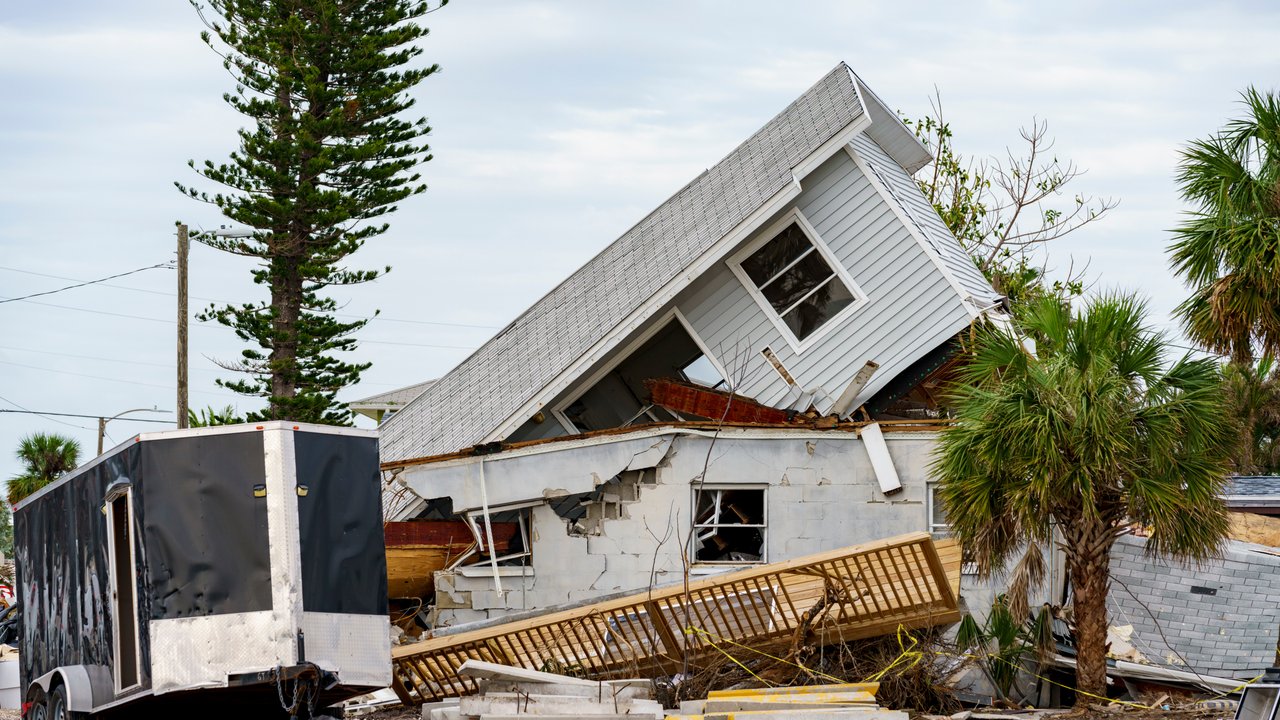
In North America, hurricanes are one of the biggest loss drivers for the insurance industry. Along with wind speed, the storm surges and inland flooding that frequently accompany hurricanes also have a significant impact on the scale of losses.
In 2024, two hurricanes that struck Florida back-to-back caused the biggest losses of the year. Hurricane Helene destroyed assets worth US$ 82bn (inflation-adjusted), and it wasn’t just the 225 km/h winds that did the damage; torrential rainfall led to extreme flooding in states to the north such as Georgia and North Carolina. Just days later, a massive storm surge produced by Hurricane Milton caused losses of US$ 39bn and the highest insured losses of the year at US$ 26bn.
In addition to the states of the southeast US, the northeast coast of North America (including Canada) is also vulnerable to hurricanes. Examples include Hurricane Sandy, which resulted in extreme losses across the New York metropolitan area in 2012, and Hurricane Fiona in 2022, which severely impacted the Canadian province of Nova Scotia. One of the most extreme scenarios: a major hurricane that moves northward along the east coast of the US but never makes landfall, instead constantly recharging itself with energy from the warm water.
... but many Asian countries have also been hit by severe storms in recent years

In many Asian countries, tropical cyclones also regularly cause billions in losses. One of the most destructive storms in recent years was Typhoon Doksuri, which passed over the Philippines in the summer of 2023 and hit the Chinese mainland with wind speeds of up to 180 km/h. Doksuri’s heavy rainfall caused extreme flooding. Adjusted for inflation, total losses were around US$ 24bn, including around US$ 2bn in insured losses.
Japan is regularly hit by tropical cyclones. As the country as a whole is highly vulnerable to natural disasters, construction standards are comparatively strict and buildings and infrastructure are more robust than in many other countries. This helps to limit losses. Nevertheless, the two costliest storms, Typhoon Jebi (2018) and Typhoon Hagibis (2019), jointly caused total losses of around US$ 30bn after adjusting for inflation. During the latter, extreme rainfall caused extensive flood damage – in some areas, 1,000 mm of rain (1,000 litres per square metre) fell in just two days.
Australia is particularly affected by powerful tropical cyclones along its entire northern coast, from Western Australia to Queensland. But even major cities such as Perth in the southwest or Brisbane in the east can be hit by tropical cyclones. Cyclones Dinah (1967), Tracy (1974) and Debbie (2017) were particularly high-loss events. In March 2025, Cyclone Alfred made landfall near Brisbane and caused billions in damage across large parts of the region due to heavy rainfall.
Is climate change worsening hurricanes and typhoons?
The eye of a hurricane can measure up to 60 kilometres.
Natural climate cycles like the “warm and cold phases” affecting the surface temperatures of tropical oceans certainly influence tropical cyclone activity, but climate change also plays a part. This is what we currently know:
- According to most scientific studies, the number of tropical cyclones will likely remain virtually unchanged in most ocean regions through the end of the 21st century. However, the percentage of major storms (Categories 4 and 5 on the Saffir-Simpson Scale) is expected to increase in most regions. As such, the risk is definitely rising.
- Storms with extreme rainfall are also becoming more frequent. Experts also attribute the rapid intensification of tropical cyclones, which makes storm alerts and evacuations more difficult, to climate change.
- The natural climate pattern ENSO (El Niño/Southern Oscillation) in the Pacific Ocean also has a substantial effect on storm activity, impacting extreme weather events practically everywhere in the world. The two ENSO phases, El Niño and La Niña, which occur in a several-year-long rhythm, produce opposing effects: while El Niño phases tend to mean fewer hurricanes in the North Atlantic, more hurricanes in the Northeast Pacific and more typhoons in the Northwest Pacific, this pattern reverses during La Niña phases. Whether or not climate change is intensifying ENSO fluctuations remains a matter of debate.
Newsletter
Solutions for assessing and managing risks
Preventive measures and better risk management, including stricter building codes and choosing other forms of land use, can limit the losses caused by tropical cyclones and help to protect people. Insurance products are a key component in providing financial support to people, businesses and public services following disasters. In addition, risk-adjusted premiums offer price incentives in return for making loss-mitigating choices. In highly developed markets such as the United States, the majority of homeowners, small businesses and industries have insurance cover for storm damage.
But flood risk is a different story: the insurance gap here is considerable, with only a relatively small proportion of material assets covered for flood damage. The same is true for flood losses caused by storm systems.
In developing and emerging countries, the insurance gap for direct storm damage is often close to 100%. Munich Re is involved in developing practical solutions in this context, in organisations such as the Insurance Development Forum, and as part of public-private partnerships. The aim is to improve loss prevention in low-income countries and enhance their ability to cope with natural disaster-related losses.
Reinsurance solutions


Industry solutions


Contact our experts