A notable trend has emerged in global health: the incidence of cancer among individuals under the age of 50 is increasing.1 Recent cancer diagnoses among high-profile celebrities and public figures have drawn attention to this issue, raising concerns about the rising occurrence of cancers typically associated with older populations in younger age groups.
Despite advancements in cancer survival rates, insurers need to consider recent projections indicating a 31% increase in the global incidence of early-onset cancers (EAOC) by 2030.2
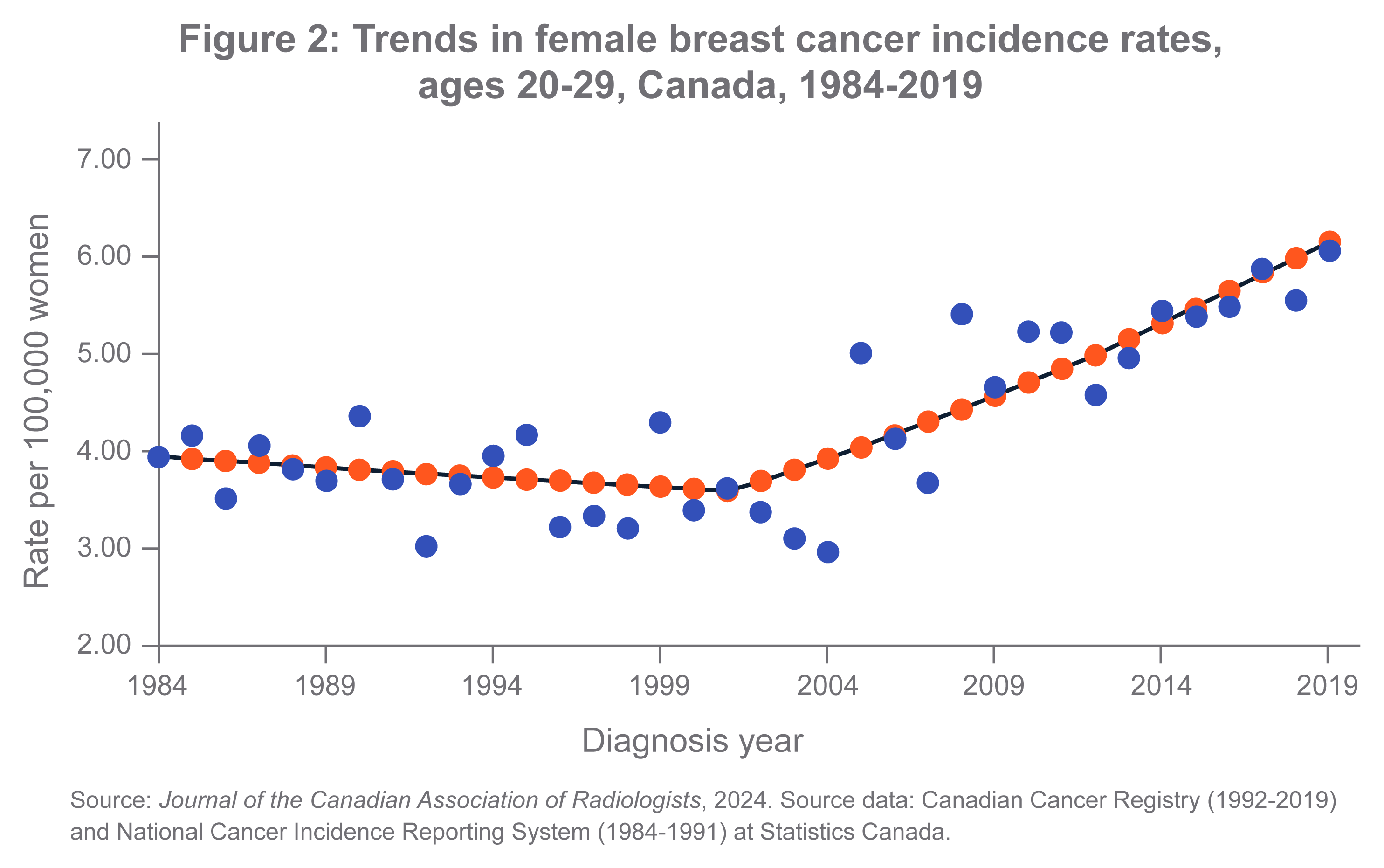
Certain types of EAOC, such as breast cancer, are particularly concerning as they often present at a more advanced stage. This is attributable to the presence of aggressive subtypes, including human epidermal growth factor receptor 2 (HER2) positive or triple-negative breast cancers, which are correlated with poorer prognosis.3
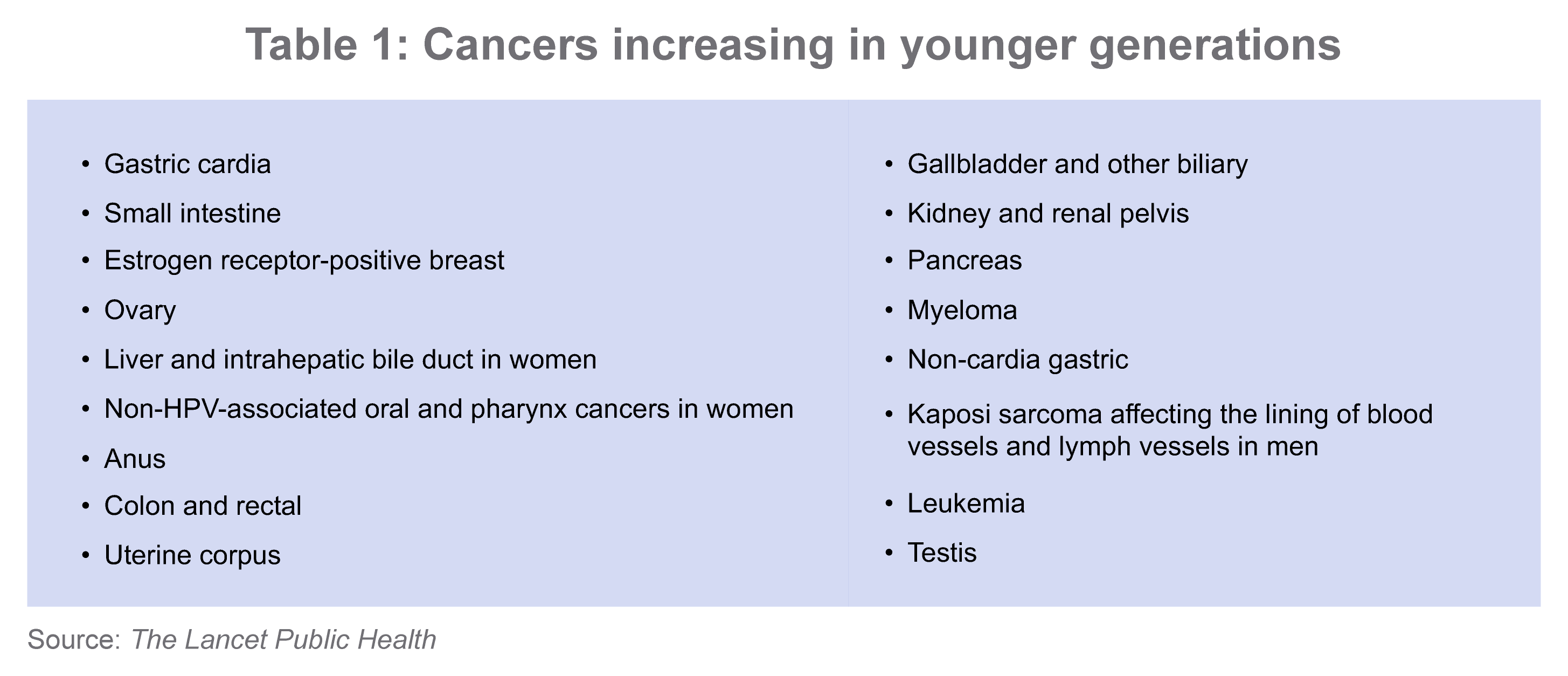
Which early-onset cancers are increasing in frequency?
What factors are contributing to this rising trend?
Some might speculate that the rise in EAOC is attributable to inherited genetic mutations; however, the reality is more complex. Genetic variations, such as germline variants, do play a role in cancer development, but they're not the only contributors. For instance, mutations in genes like BRCA1 and BRCA2, commonly linked to breast cancer, are found in only about 5-10% of all breast cancer cases, suggesting that other factors are also at play.7
The search for underlying causes is an ongoing effort, and despite progress, much remains to be discovered. Research indicates a complex interplay of factors, including lifestyle choices, obesity, and metabolic syndrome, all of which contribute to increased inflammation and hormonal imbalances – such as disruptions in insulin regulation, fluctuations in leptin levels, and changes in cortisol production.8 Additionally, environmental chemicals, microplastics,9 antibiotics,10 air pollution, and excessive artificial light exposure11 are among other potential emerging carcinogens being investigated.
Delayed cancer diagnoses in younger adults are often linked to factors like busy lifestyles, which can lead to infrequent health check-ups and a tendency to overlook or downplay suspicious symptoms. As a result, cancers may be detected at later stages, leading to limited treatment options, poorer prognoses, and reduced survival rates.
It's important to note that some of these ideas are still speculative and may be proven incorrect. Nevertheless, the field remains open to new discoveries that could lead to novel theories and a deeper understanding of the complex factors involved.
More extensive screening, such as updated guidelines, enhanced imaging technologies, and intensified surveillance of high-risk populations, may also contribute to the rising incidence of EAOC, with notable increases observed in breast, prostate, and thyroid cancers.12 While earlier detection is highly beneficial, it's crucial to recognize that this does not necessarily imply an actual rise in cancer incidence. Instead, it indicates that cancers are now being identified at earlier stages, whereas previously, they may have gone undetected until later.
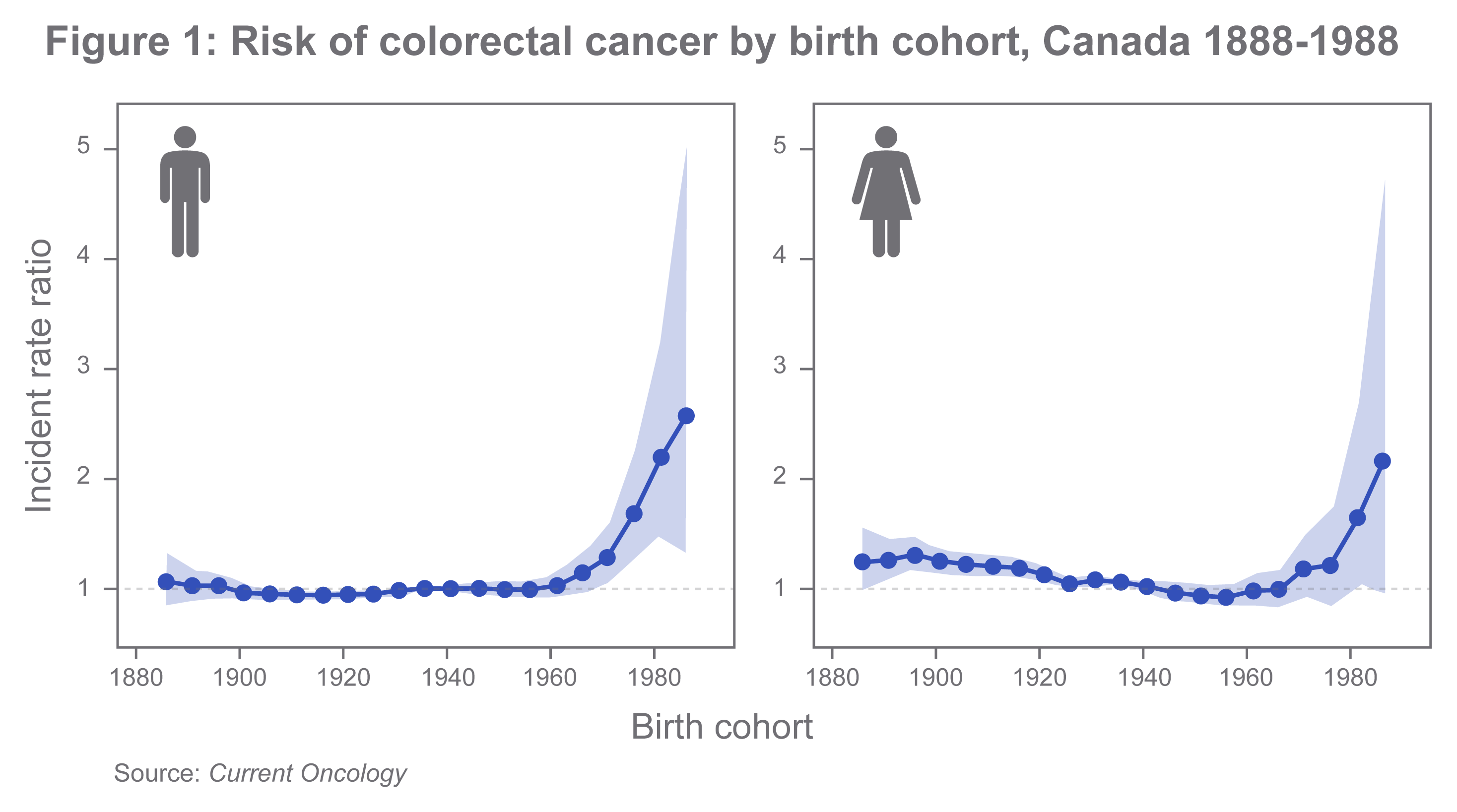
In Canada, routine colorectal cancer screening is typically recommended beginning at age 50 for individuals at average risk. Consequently, many individuals under 50 are deemed ineligible unless they present specific risk factors or symptoms. Those who do not qualify for screening through the public system may still access it privately at their own expense. Nonetheless, some researchers argue that earlier and more frequent screenings could be advantageous, prompting discussions regarding the optimal screening age for breast cancer.13 Similar deliberations are occurring for colorectal cancer screening, with considerations to lower the starting age from 50 to 45 or younger.14
What are the potential implications for life and critical illness insurance?
The rising incidence of cancer among young Canadians could potentially impact the life and critical illness (CI) insurance industry. Several key factors and important considerations deserve attention, including:
- Life insurance underwriting: Insurers must adapt to evolving cancer screening practices, such as revised age thresholds for initial screenings, and update their underwriting guidelines to maintain relevance and effectiveness. This may involve revisiting risk assessment protocols and updating underwriting criteria to reflect changing cancer screening recommendations.
- Critical illness insurance: The dominance of cancer as a claim driver, currently accounting for approximately 70% of CI claims, raises important questions about the long-term viability of CI insurance products in their current form.15
- Regulatory landscape and Right to Be Forgotten (RBTF) legislation: Introduced by the European Commission in 2021, this landmark legislation enables cancer survivors in certain European countries to keep their previous cancer diagnosis confidential when applying for life insurance. The law also prohibits insurers from considering medical information related to cancers that occurred more than 5-10 years prior when determining policy premiums. As the RTBF continues to gain traction, it may trigger a wave of similar regulatory reforms in North American markets, potentially leading to far-reaching implications for life and CI insurers.
- Product innovation and design: Insurers may need to revise their products and should consider incorporating innovative features, such as prevention-focused benefits, early detection initiatives, and wellness programs. By promoting cancer risk reduction and supporting public well-being, insurers can create more value for policyholders, contribute to a positive social impact, and differentiate themselves in a competitive market.
Looking ahead
The ongoing research into the causes of EAOC highlights the need for a comprehensive approach to address this emerging trend. Although the exact reasons for the varying incidence among different populations are not yet fully understood, it is essential that medical researchers continue their efforts to help prevent a potential global health problem.
However, the prognosis for Canadians with cancer has never been more promising. The overall five-year net survival rate for all cancers has risen to an estimated 64%, up from 55% in the early 1990s. This is a significant improvement from the 25% survival rate in the 1940s.16 Moreover, despite lung cancer remaining the leading cause of cancer deaths in both men and women in Canada, its mortality rate is declining at a record pace, offering renewed hope for those affected by this disease.17
The rapid progress in cancer research is revolutionizing our understanding and approach to cancer prevention, diagnosis, and treatment. Emerging technologies, particularly artificial intelligence (AI), will play a pivotal role. AI can analyze vast amounts of biometric, genetic, and imaging data to enhance cancer risk prediction and enable earlier detection. AI-driven diagnostic breakthroughs, such as liquid biopsies, will facilitate the molecular and genetic analysis of bodily fluids, enabling more accurate and timely cancer identification. Moreover, cancer therapies will become increasingly personalized, driven by advances in tumor genetic analysis, targeted drug development, and immunotherapies.
These advancements are poised to drive reductions in cancer mortality rates, exceeding the progress made in recent decades. In light of the rising incidence of EAOC, it is crucial for the insurance industry to remain informed and adapt to these developments. Underwriters must remain vigilant and thoroughly assess all relevant risk factors at the time of underwriting, including significant family histories of cancer, potential health indicators suggesting early cancer, results from screening programs, and recommendations for proactive intervention or more frequent screenings.
As a leader in the insurance industry, Munich Re remains committed to maintaining a deep understanding of the latest advancements and research on EAOC. We proactively track emerging trends, groundbreaking discoveries, and innovative treatments, ensuring that our expertise reflects the latest scientific findings.
References
Contact the Author