Beyond what meets the eye

Thoughts on the term “disability”
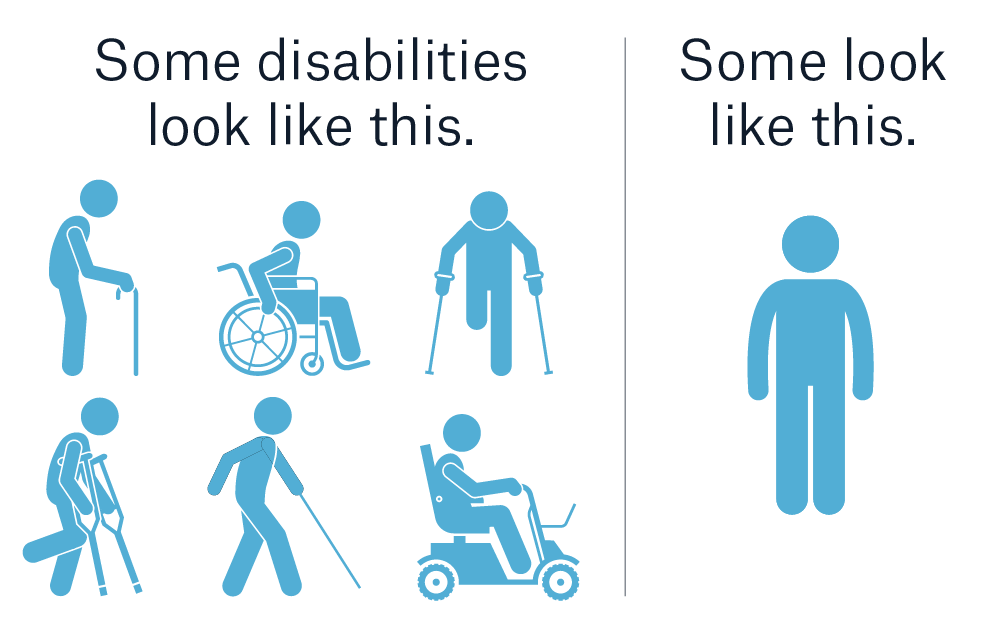
When most people hear the word disability, they often picture a wheelchair, a cane, or a designated handicap parking space. These visible markers have long shaped public perception of what it means to be disabled. But what if the challenges someone faces aren’t immediately apparent?
Invisible disabilities encompass a broad and diverse range of conditions that affect millions of people, often without any outward signs. These include, but are not limited to:
- Autism spectrum disorders, bipolar disorders, and other mental health conditions
- Crohn’s disease and other gastrointestinal disorders
- Diabetes
- Lupus
- Sleep disorders
- Chronic fatigue syndrome, chronic pain, and fibromyalgia
These conditions impact daily functioning, energy levels, cognitive clarity, and emotional well-being, yet they frequently go unnoticed or are misunderstood.
Legal recognition: The ADA of 1990
Invisible disabilities and insurability
Does having an invisible disability mean an individual cannot work or qualify for Disability Insurance? Not necessarily. In Disability Insurance underwriting, we see some of these conditions quite often (e.g., obstructive sleep apnea, psychiatric conditions, gastrointestinal diseases); however, having an invisible disability does not disqualify these applicants from insurance.
Many individuals, especially those with early intervention/therapy, are stable and their conditions are well-managed on one or more medications or with the use of medical devices, allowing them to lead productive, balanced lives. Thus, carriers may want to consider whether modifications such as exclusions, extra premiums, and/or reduced benefit periods are needed to reduce risk but also offer these individuals the valuable coverage they need.
A symbol of recognition: The sunflower
Invisible disabilities in the workplace
Invisible disabilities often go unnoticed, and workplaces are no exception. Avoiding assumptions and judgments is essential. Building trust and understanding starts with taking the time to get to know each individual on a personal level and learning about the unique challenges they may face.
People living with invisible disabilities frequently bring valuable perspectives, skills, and experiences that enrich the workplace. By recognizing and celebrating these differences, organizations can foster an environment where everyone feels respected, empowered, and supported.
Final thoughts
Contact the author

Related Solutions




properties.trackTitle
properties.trackSubtitle