
Climate change never goes on holiday. Plan ahead to keep people and assets safe
Make climate-smart decisions for travel and tourism with Location Risk Intelligence.
Will travel and tourism survive climate change? Natural hazard events threaten favourite travel destinations. Cancelled bookings, drops in tourist numbers, and increased damage to property and infrastructure punish revenue.
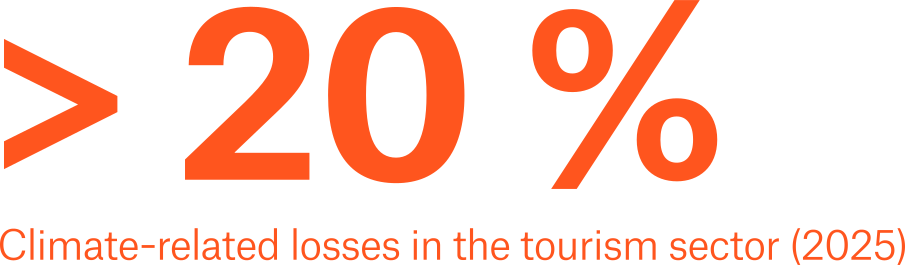
The World Economic Forum notes that the travel sector reported climate-related losses over 20% in 2025. Travel and tourism contributes roughly US$11.7 trillion to the global economy. It accounted for just over 10% of global GDP, or one in 10 jobs around the world (371 million) in 2025.
Yet natural hazards and climate change are eroding dream destinations. Travel companies, hotels, and local businesses all suffer. Wildfires regularly force Greece to evacuate holidaymakers. Visitors to 21 cities in Italy were met with “red alert” conditions in 2025, denoting health risks from the intense heat. Rising seas threatens coastal areas. For example, 80% of the Maldives is less than one meter above sea level.
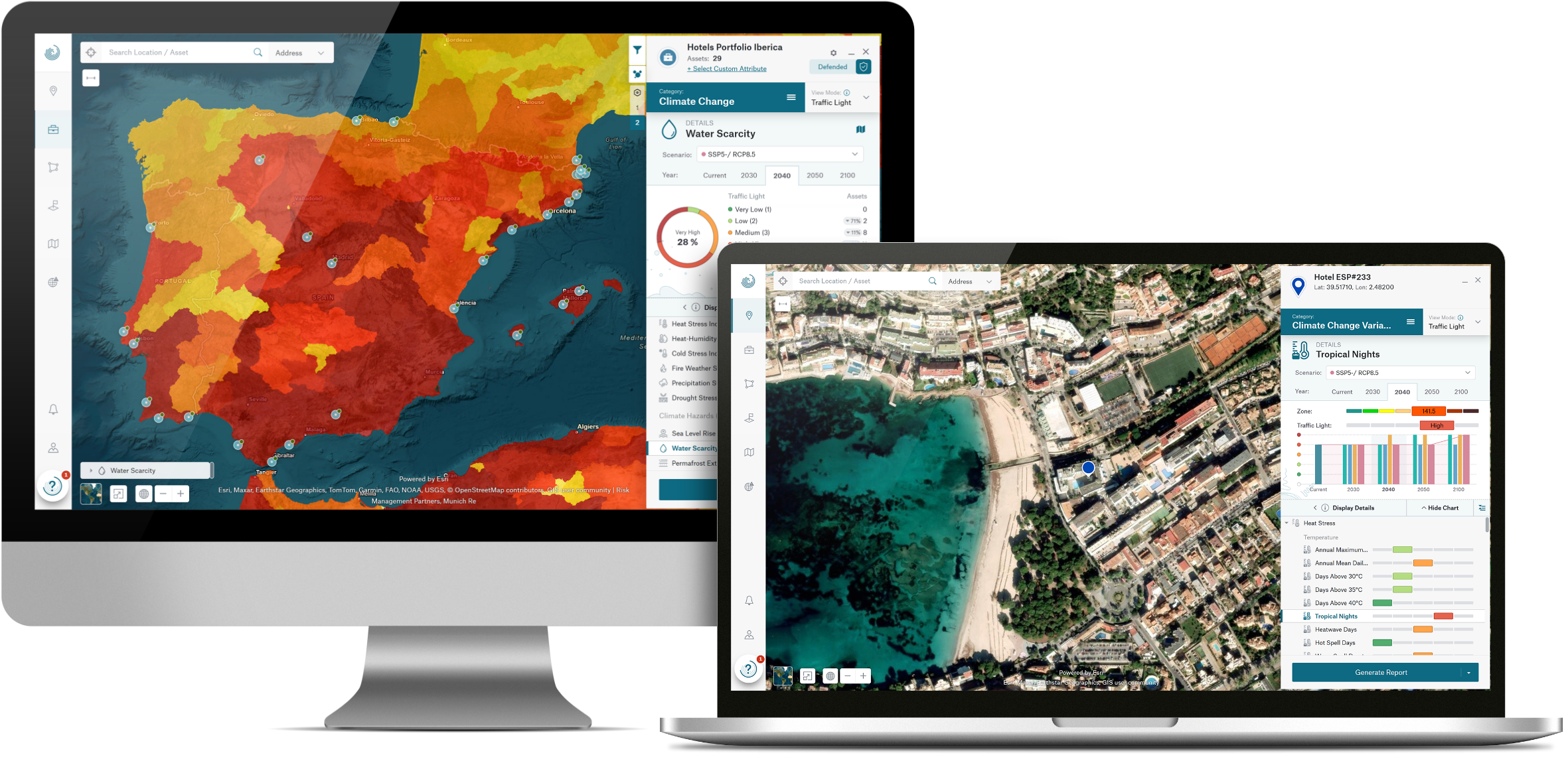
Munich Re’s Location Risk Intelligence lets you identify and understand your exposure to physical climate risk anywhere in the world. Plan ahead to keep resorts open and tourist routes operating.
Turn the top four climate change risks into travel and tourism opportunities
Location Risk Intelligence helps you to manage climate risks, and even to turn them into competitive advantages. With climate-smart decisions, you avoid financial losses from damage and depreciation. Develop strategies to keep accommodations open and transportation routes running.
1. Use climate data to guide investment and adaptation plans
Extreme weather threatens people and properties. Coastal resorts face rising seas and storm surges. Conversely, water scarcity also puts destinations at risk.
Understand climate change impacts and inform investment decisions with Location Risk Intelligence. Prepare water supply plans to host guests. Positively influence insurance rates through climate-adaptation measures. Use climate scenarios to adjust your portfolio if needed.
2. Assess climate risks to make infrastructure more robust
Heat, flooding, and intense storms can destroy ports, ships, airports, roads, and rail lines. Increased costs, interruptions, damage, and loss of customer trust are the consequences.
With Location Risk Intelligence, you visualise risk-prone areas and identify vulnerabilities on a world map. Upgrade your infrastructure with climate-resilient materials to reduce damage. Develop proactive measures based on past and projected future events.
3. Anticipate hazards to ensure smooth, sustainable operations
Heatwaves, cold snaps, rain or flooding can destroy crops, push up prices, and delay food delivery. Large restaurant chains increasingly must disclose physical climate risks.
Understand and assess climate risks with Location Risk Intelligence. Reduce dependency on single sources vulnerable to climate impacts. Collect climate risk data to meet disclosure requirements. Report with confidence under frameworks such as CSRD or ISSB.
4. Safeguard your travel business from evolving climate risks
Tour operators must adapt to climate change. Chronic shifts in heat or precipitation can cause travellers to avoid certain locations.
Tourists might think dream destinations are too hot, or too wet, in summer. But such travel spots could become more interesting in the off-season. Accommodate climate shifts. Use Location Risk Intelligence to identify alternatives and maintain profitability.
Your benefits with Location Risk Intelligence in travel and tourism
Reduce weather-related revenue loss
The solution details your climate risk exposure at specific locations. Develop preventative measures for fewer cancellations.
Make better decisions
Get precise data in the format you need, whether via PDF, CSV, Excel, or API. Boost your efficiency and save time.
Protect people and infrastructures
With climate scenarios up to 2100 based on Intergovernmental Panel on Climate Change (IPCC) data, you can plan accordingly.
Keep locations safe
We deliver data on over 80! individual perils. Identify vulnerabilities to mitigate damage and avoid losses.
De-risk coastal investment decisions
Understand elevation profiles and exact altitude of selected areas to evaluate the potential sea-level rise.
Build future climate resilience
Climate risks may include subsidence, when land sinks. Develop adaptation strategies to ensure revenue.
Contact us to learn how your travel business can stay resilient and profitable in a changing climate.
