Webinar: Supply chain resilience by design

Climate risks can derail transportation and logistics
Location Risk Intelligence steers you in the right direction to avoid loss and damage.
Natural disasters severely punish the transportation and logistics sector. Companies suffer infrastructure damage, supply chain delays, and skyrocketing operating costs. This means adapt or face late deliveries, higher freight and insurance costs, and lost revenue.

The global transport infrastructure faces direct damage worth US$ 15 billion per year, according to a 2022 United Nations report on climate risks in the transportation sector. For example, extreme heat accounted for 20% of train cancellations in 2021 and 2022 at France’s national railway, SNCF.
All types of infrastructure and equipment are at risk. Low water levels paralyse inland shipping. Rising water levels submerge ports, railways, and roads. Aviation and coastal transportation hubs are the most vulnerable sub-sectors to storm surge, flooding, and sea-level rise, notes the U.N. report.
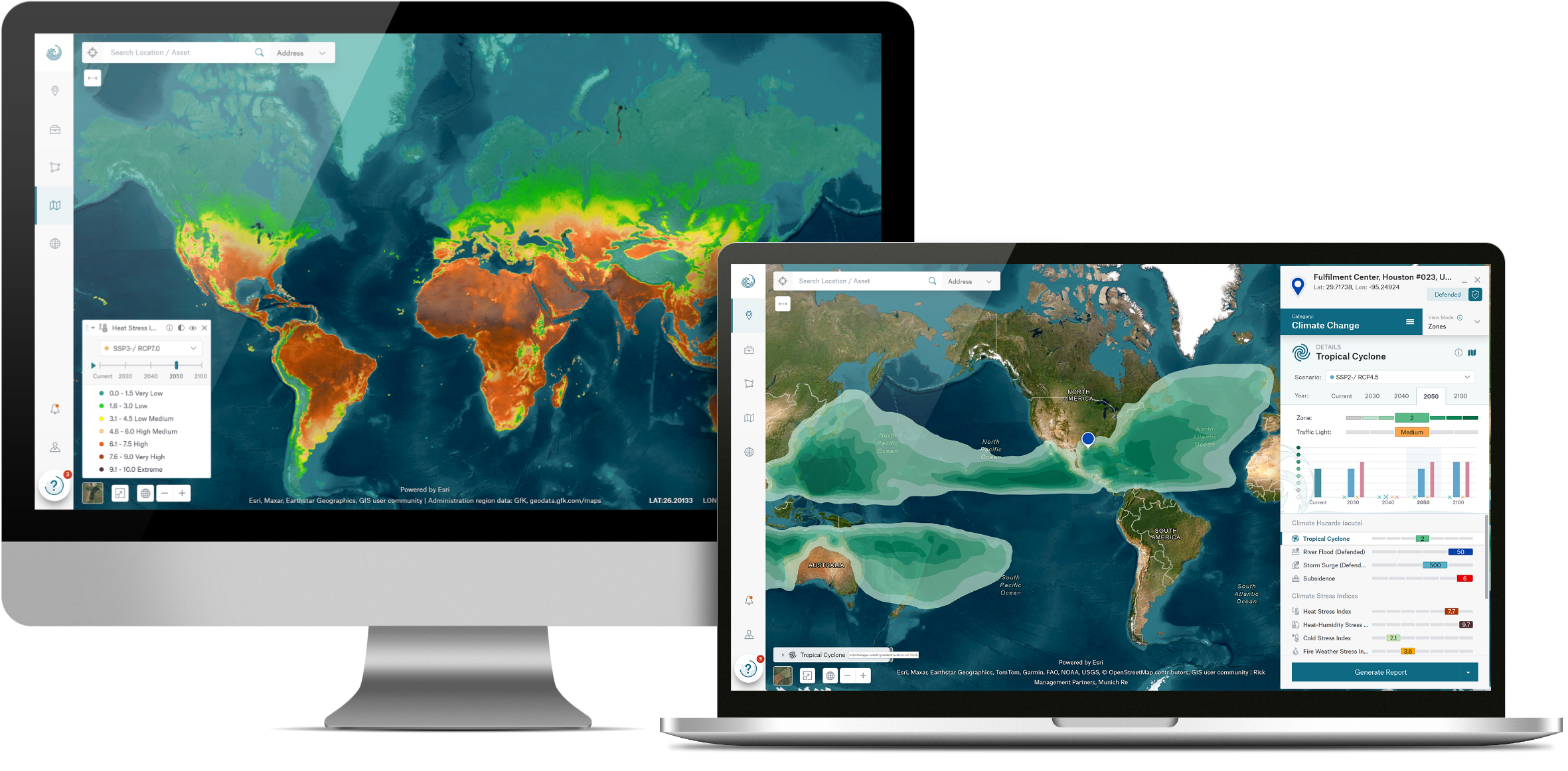
With Munich Re’s Location Risk Intelligence, you can visualise your exposure to physical climate risk on a world map. Reduce damage and disruptions to keep your transportation and shipping timetables on track.
Turn climate risks into opportunity. Learn how to manage the top five transportation and logistics detours.
Climate change is making weather events more frequent and intense. With Location Risk Intelligence you can analyse, measure, compare, and document climate-related hazards. Develop adaptation strategies that minimise disruptions and financial losses. Safeguard profitability and maintain service.
1. Assess potential infrastructure damage to develop adaptation strategies
Whether from storms, heat, or earthquakes, all types of infrastructure are at risk. Damage in the logistics chain can result in delayed shipments, higher repair costs, and lost revenue.
Use climate risk data from Location Risk Intelligence to identify the frequency and intensity of natural hazard events. Incorporate adaptation measures to avoid excessive repair costs of road networks, ports, and terminals. Boost resilience with proactive maintenance and materials that can withstand extreme events.
2. Keep services running to maintain your good reputation
Service shortfalls mean loss of revenue and trust. If companies fail to deliver, clients switch to competitors or other transportation modes.
Understand past and potential events with Location Risk Intelligence. Assess current climate risks and asset vulnerabilities to know where action is required. Explore future climate scenarios to understand how climate risks might change. Create procedures to respond to upstream and downstream disruptions.
3. Minimise hazard losses to keep insurance and repairs affordable
Higher insurance premiums often accompany climate-exposed assets and their increased maintenance costs.
Demonstrate climate-risk readiness with Location Risk Intelligence. Identify which assets are most at risk. Invest in climate-resilient upgrades so assets can better withstand extreme events to avoid costs and repairs. Positively influence insurance rates through climate-adaptation measures.
4. Meet regulatory requirements and reduce disclosure effort
Regulations increasingly require logistics and transportation companies to assess, report, and address physical climate risks.
Ensure compliance with audit-ready data from Location Risk Intelligence. Get quantitative and qualitative climate risk data for transparent disclosures and compliance to regulations such as the CSRD. Generate reports faster, build consumer confidence, and keep investors on board.
5. Understand risk exposure so you can establish alternative routes
Climate events such as hurricanes and floods drive supply chain disruptions. Delays in transportation and logistics may lead to ripple effects and slower disaster recovery efforts.
Use Location Risk Intelligence to pinpoint weak spots in supply chains. Use a multi-modal mix of road, rail, air, and sea transport strategies. Diversify suppliers and develop routes across geographical regions to avoid impacts from the same natural hazard. You remain a reliable partner despite extreme weather events.
How Location Risk Intelligence benefits transportation and logistics
Understand risk exposure
Evaluate single assets or entire infrastructure areas such as rail systems. Take steps to mitigate disruption with climate-resilient upgrades.
Ensure business continuity
We deliver data on over 80 individual perils. Fully capture the effects of climate change and identify protection gaps so you can plan ahead.
Plan with confidence
Climate risks continue to evolve. Location Risk Intelligence provides climate scenarios up to 2100. Learn how to protect people and assets.
Make informed, data-based decisions
Data comes from a true expert with 140 years of climate risk experience. Incorporate our expertise into your strategy.
Reduce workloads
Get the data in the format that meets your needs: PDF, CSV, Excel, or via API. Save time and increase efficiency.
Simplify your reporting
Easily generate regulatory-compliant ESG and climate risk reports, based on validated data. Gain the trust of customers and investors.
Get expert advice on how to make your transportation and logistics network more resilient to climate risks.

With a global portfolio of our size, Prologis makes reliable measurement a priority to inform our data-driven decision-making process. Munich Re has been our trusted partner to measure the impact of climate change across our real estate portfolios. Their Location Risk Intelligence Platform provides us with assessments on not only our entire portfolio, but also on individual assets. These insights provide us in-depth knowledge of our future potential risk exposure from extreme weather events.
