
Bad weather? Make sure consumer goods are good to go
Anticipate hazards to keep B2C operations and supply chains running.
Consumer goods companies operate complex global value chains. Climate insights from Munich Re’s Location Risk Intelligence SaaS solution helps consumer goods producers manage the impacts of natural hazards on operations, supplier networks, and distribution pathways. Report-ready data supports disclosure requirements.
Climate risk and extreme weather such as such as heatwaves, flooding, storms, droughts, and wildfires strongly affect both supply and demand of consumer goods. Natural hazard events disrupt sourcing regions, production sites, and transport routes – potentially just as buyers are demanding your products.
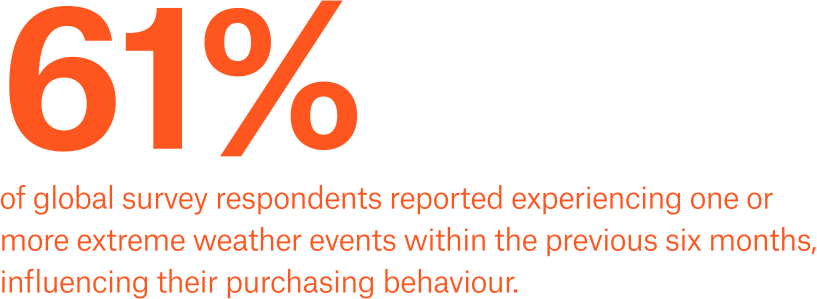
Source: Deloitte: Sustainability Signals survey (20,000 respondents in 20 countries) April 2026
For manufacturers and brands, disruption translate into delayed deliveries, inventory losses, and pressure on margins and on customer satisfaction. Understanding where assets, suppliers, and logistics nodes are located and how exposed they are to climate risks helps you stay ahead.
Munich Re’s Location Risk Intelligence allows consumer goods companies to manage climate risks at site, supplier, and regional level. Precise geospatial data supports supply chain planning, resilient operations, and investment decisions.
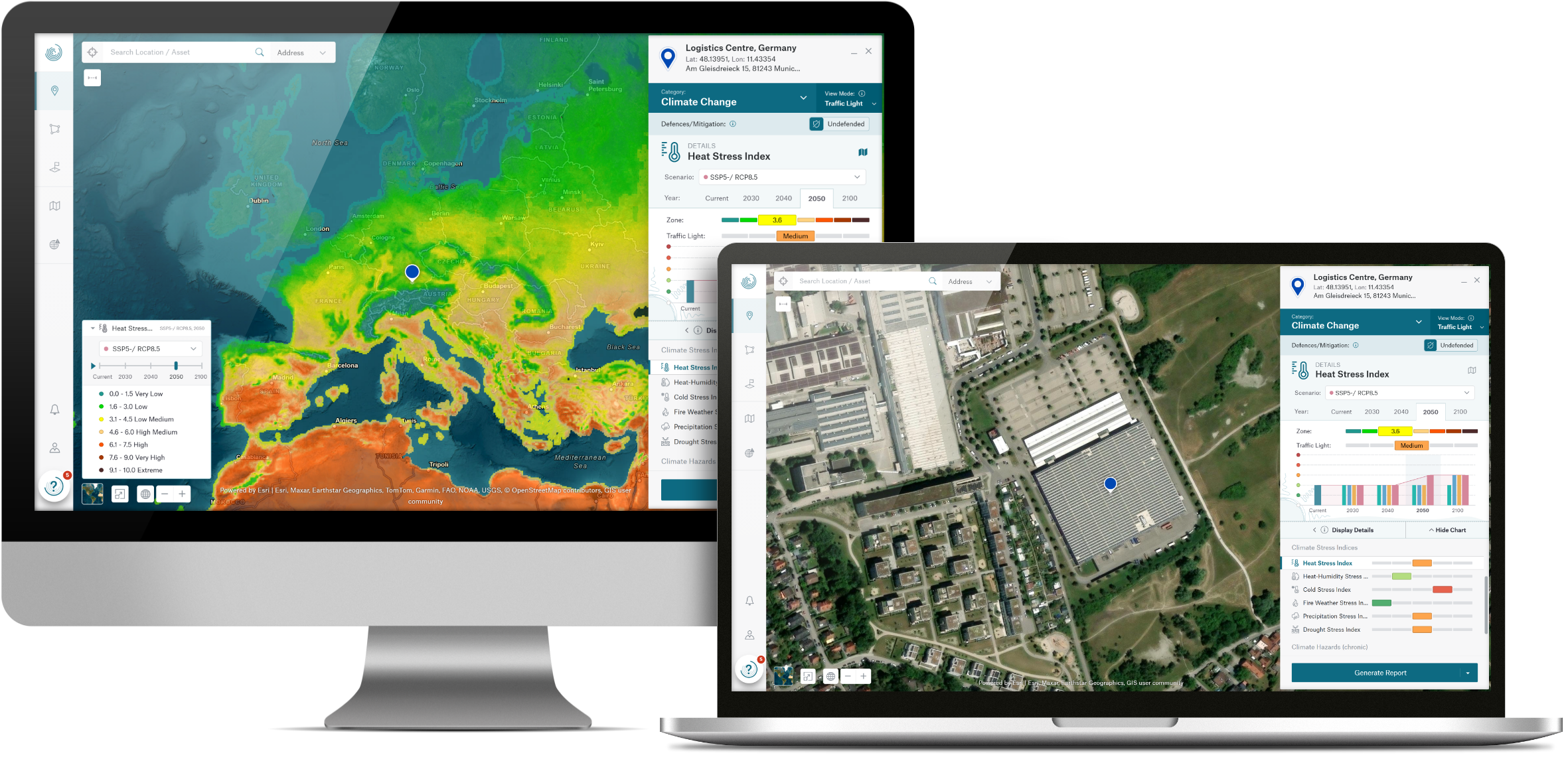

Munich Re’s Location Risk Intelligence allowed us to swiftly carry out a risk analysis for all our production sites that is filterable and applicable by specific regions. This gave us an at-a-glance overall view of climate risk.
Turn the top four climate-related risks into consumer goods resilience
Location Risk Intelligence helps consumer goods companies manage physical risks from natural hazards and climate change to help protect investments by securing operations and maintaining reliable delivery.
Extreme weather and climate shifts can disrupt supplier reliability and raw‑material availability. Flooding, drought, or heat stress at supplier locations can lead to shortages or delays, along with increased procurement costs.
With Location Risk Intelligence, you can assess climate risks across supplier networks and sourcing regions. Use precise, location‑specific climate insights to support supplier selection and contingency planning.
Manufacturing plants, warehouses, and distribution centres may be exposed to floods, storms, heatwaves, and wildfires. Extreme weather events can halt production or damage assets and inventory.
Location Risk Intelligence visualises site‑specific risks worldwide and supports proactive adaptation, from flood‑resilient planning to heat‑aware facility design and logistics routing.
Boards and CFOs are beginning to see climate risk as a financial as well as a sustainability issue. Consumer goods companies are under pressure to identify and disclose how climate-related risks affect financial performance in key areas:
- Supply chain continuity and business model resilience
- Risk management processes and insurance strategy
- Asset values and investment planning
Location Risk Intelligence data is aligned with regulatory frameworks such as CSRD and TCFD/ISSB, and provides harmonised formats to improve transparency and streamline reporting.
Effects of climate change, including rising temperatures and more frequent extreme weather events, can undermine long-term site suitability and operational performance.
Use Location Risk Intelligence to assess whether facilities can withstand natural hazards in a changing climate, plan adaptation measures, and reduce the risk of stranded or underperforming facilities.
Your benefits with Location Risk Intelligence in consumer goods
Reduce climate-related downtime
Identify exposure to strengthen business continuity, support customer service, and stabilise revenue.
Make better decisions
Access precise, location-based climate data to help you improve sourcing and site planning.
Protect assets and inventories
Use IPCC‑aligned climate scenarios up to 2100 to plan investments and protect assets and inventory.
Improve supply chain resilience
Gain insights to anticipate hotspots, set priorities, and reduce disruption-driven costs.
Build operational resilience
Identify climate risks early and protect margins, service levels, and brand trust.
Increase transparency
Align with regulatory frameworks to satisfy stakeholders and consumer expectations.
Contact us to learn how your consumer goods company can maintain its competitive edge in uncertain climate conditions.
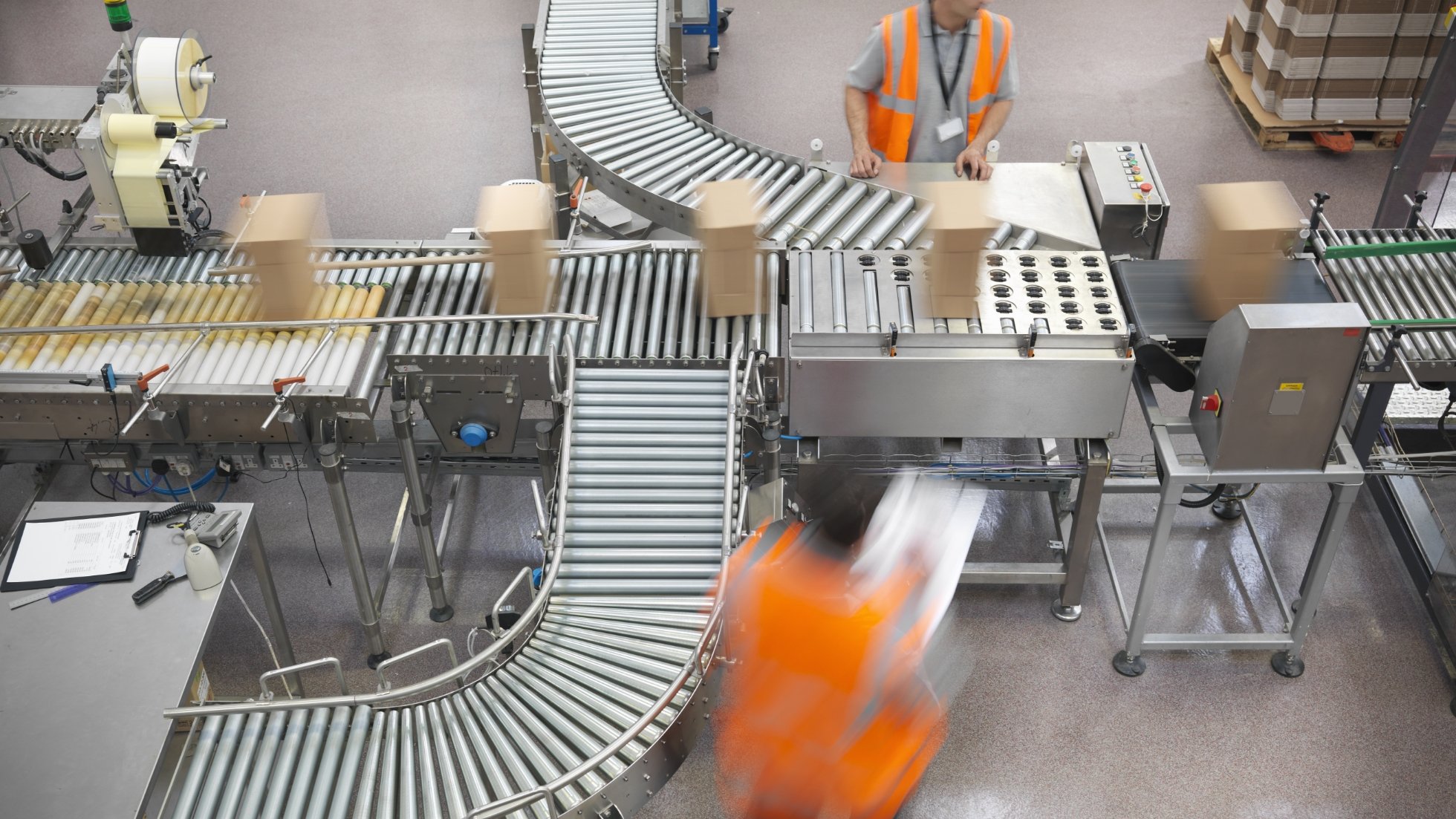
How Location Risk Intelligence and its editions support the consumer goods industry
Munich Re’s Location Risk Intelligence is a modular SaaS solution that enables consumer goods companies to understand, measure, and manage physical climate risk all the way from sourcing to buyers.
Climate Change Edition
Understand how current and future climate risks affect raw material supply, operations, and distribution.
Climate Financial Impact Edition
Quantify the expected financial impact of natural hazards and climate change on facilities, and infrastructure.
Reporting Edition
Support CSRD, EU Taxonomy, TCFD/ISSB and other reporting frameworks with ready‑to‑use physical climate risk data.
Reduce your risks. With Location Risk Intelligence’s data‑driven insights, you protect operations, safeguard assets, and boost resilience across your consumer goods value chain.
Frequently Asked Questions
How does Location Risk Intelligence support the consumer goods value chains?
With Location Risk Intelligence, companies can assess climate risks across sourcing regions, manufacturing locations, and distribution hubs, helping them to identify exposure and strengthen their supply chain.
Which strategic and operational decisions do location based climate risk insights inform?
Location Risk Intelligence supports decisions related to supplier selection, footprint optimisation, inventory positioning, and long-term resilience planning.
How does the solution support supplier, manufacturing, and logistics risk assessments?
Location Risk Intelligence provides consistent, geospatial insights that allow companies to compare sites, suppliers, and transport corridors using a common risk lens.
Which internal functions typically use Location Risk Intelligence in consumer goods companies?
The solution is used by procurement, supply chain, operations, risk management, and sustainability teams to align decisions around current continuity and future resilience.
Can Location Risk Intelligence be integrated into procurement, risk, and sustainability processes?
Location Risk Intelligence can be embedded into existing workflows to support supplier due diligence, risk assessments, and reporting requirements with consistent location‑level data.
Can Location Risk Intelligence support inventory and warehouse risk management?
Yes. The solution helps assess climate risks at warehouse and inventory locations, supporting decisions on inventory positioning, safety stock levels, and contingency planning for climate‑related disruptions.
How does Location Risk Intelligence support diversification of sourcing and manufacturing?
By comparing climate risk exposure across regions and sites, the solution supports data‑driven diversification strategies, helping reduce dependence on hazard-prone sourcing and production hotspots.
Can the solution inform investment and footprint optimisation decisions?
Yes. Forward-looking climate risk insights enable consumer goods companies to assess the long‑term suitability of manufacturing sites and reduce the risk of stranded or underperforming facilities.
Can Location Risk Intelligence data be used for climate risk reporting and disclosures?
The solution provides consistent, location-level risk data that supports internal reporting and external disclosures. Companies can improve the transparency and auditability of reporting processes.